

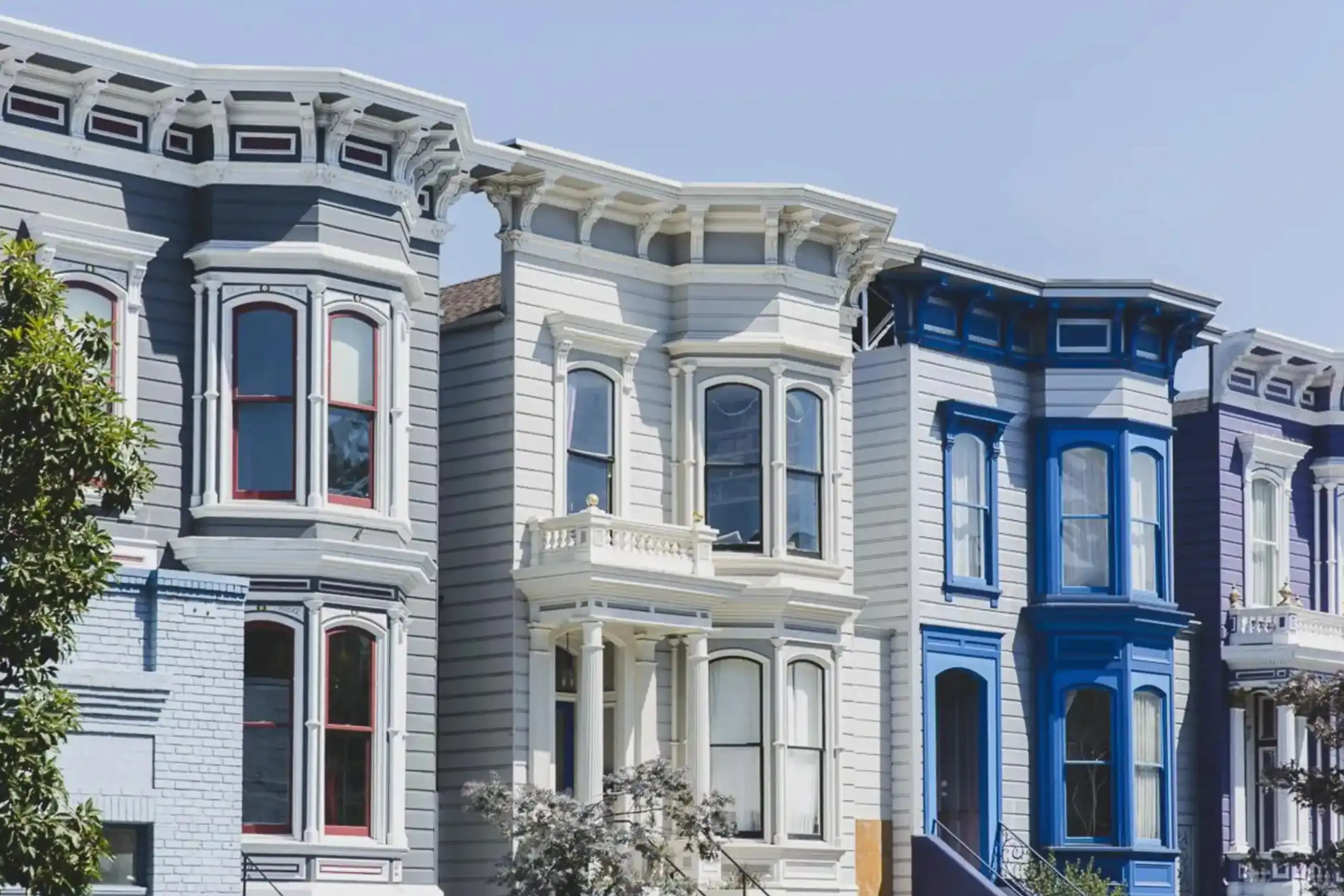
Today, It’s the Most Expensive Housing Market in America.
For a while, the story about San Francisco was that it was over. Remote work sent people looking for space and lower costs elsewhere, and the city’s housing market followed them down. That story no longer matches what’s happening on the ground.
San Francisco has reclaimed its position as the most expensive housing market in the country, according to a Redfin report covered by Mansion Global. And locally, the data behind that headline is even more specific than the headline itself.
What Happened to San Francisco’s Housing Market After 2020?
Remote work didn’t just change where people worked. It changed where they were willing to live. Buyers who no longer needed to be near an office left the city for markets with more space at a lower price, and San Francisco’s housing market cooled as a result.
That shift pulled demand out of the city for several years. It didn’t erase San Francisco’s value – it just meant fewer people were competing for it.
How Far Has San Francisco’s Market Actually Recovered?
San Francisco home prices have climbed a long way since March 2012, when the metro area’s median stood at $625,000 in the aftermath of the 2007–09 financial crisis. That’s the baseline everything since has been measured against.
The city has now fully closed that gap and moved well past it, enough to make it, once again, the most expensive housing market in the country.
That’s the headline number. The more useful one is what’s driving it.
What’s Actually Driving the Rebound?
The wealth pulling San Francisco’s market back is different from what left it, and not just in scale.
Remote-work relocations in 2020 and 2021 were funded largely by savings and salary – money that could just as easily support a move to Austin or Denver as a home in San Francisco. The wealth driving this cycle is tied more directly to being here: equity concentrated in a small number of AI companies built and headquartered in the Bay Area. That’s a large part of why it’s staying local instead of spreading across the cities that gained population when San Francisco lost it.
The July 2026 Compass San Francisco Market Report puts real numbers behind that shift. In June:
- The median single-family home in San Francisco sold for $2,128,000, up 24.8% from a year earlier.
- Homes traded at a 125.2% sold-to-list ratio – well above asking, not the exception.
- The typical home went under contract in 21 days, down from 27 days a year ago.
- Active inventory sat at a 92% absorption rate – the tightest for a summer since 2020.
- 44 homes across the city sold for at least $1 million over their asking price.
Those aren’t three separate trends – they’re one. In a typical market, speed and price move in opposite directions: homes that sell fast tend to go for close to asking, and homes that sit longer are usually the ones that get discounted. San Francisco is doing both at once right now, moving in just 21 days while still closing at 125% of asking. That combination only shows up when there are more prepared buyers than available homes. Nobody has room to negotiate while they wait, because someone else is ready to move if they hesitate. The speed and the price aren’t two different stories. They’re the same shortage, showing up twice. Larger, well-prepared homes are the scarcest of all right now, which is exactly where that competition is sharpest.
Two of the largest AI companies, OpenAI and Anthropic, are expected to go public later this year or in early 2027, per Redfin’s coverage. If that timeline holds, this pressure is more likely to continue than ease.
None of that makes the current pace guaranteed. This cycle is tied closely to a specific, concentrated source of wealth, ahead of events that haven’t happened yet. If those IPO timelines slip, or if new inventory eventually catches up with demand, some of today’s pressure will ease with it. That’s not a reason to wait – it’s a reason to plan around your specific situation rather than assume today’s pace holds indefinitely.
Is the Growth the Same Everywhere?
No – and this is where a citywide headline stops being useful.
Single-family homes and condos are not moving at the same pace. The median condo price reached $1,225,000 in June, up 6% year-over-year – real progress, but a fraction of the 24.8% single-family homes are posting. Condos are getting faster to sell, too: the typical condo sold in 37 days in June, down from 60 days a year earlier.
The same is true block by block. Pacific Heights single-family homes are up 25.6% year-over-year; Noe Valley is up 15.4%. A citywide number can tell you what’s happening overall. It won’t tell you what’s happening on your street.
What Does This Mean If You’re Buying or Selling in San Francisco?
For sellers, pricing matters more than it did a year or two ago, not less. A home priced and positioned for today’s buyer still moves quickly. One priced for how the market behaved even twelve months ago often sits – which is exactly the gap we walk sellers through before a listing goes live, not after it’s already sitting.
For buyers, the shift is in how decisions get made. Speed used to come from urgency. Now it comes from preparation – buyers who’ve done the work to know exactly what they want, then move decisively once they find it.
Neither side is well served by a citywide average. Both are well served by knowing what’s actually happening in the specific neighborhood, and at the specific price point, that applies to them.
That’s the conversation we have with clients every day. Thirty years of combined experience in this market, a J.D. and an MBA between us, and a record of results across $750M+ in career sales – RealTrends Verified as a Top Team for 2026, placing us in the top 1.5% of real estate professionals nationwide – exist to answer one question clearly: what does this mean for you, specifically.
If you’re weighing a move in San Francisco, we’re glad to walk through what the data means for your situation. No pressure, just a clear read on where things stand and what your options actually look like.
Frequently Asked Questions
Is now a good time to buy in San Francisco? It depends on the property and the segment. Single-family homes are moving fast and often above asking; condos are recovering more slowly and may offer more room to negotiate. The right answer depends on what you’re buying and where.
Why are San Francisco home prices rising so fast in 2026? A combination of factors: wealth generated locally by the AI industry’s growth, historically tight inventory, and buyers who are prepared to move quickly once they find the right property.
How much have San Francisco home prices increased since the 2012 low? San Francisco’s median home price stood at $625,000 in March 2012. It has since climbed enough to make San Francisco the most expensive housing market in the country again, per Redfin’s data.
Is the AI boom changing who’s buying in San Francisco? Yes. A larger share of today’s buyers are drawing on wealth generated locally by the AI industry’s growth, and it shows up most clearly in competition for larger, well-prepared homes – the segment where inventory is tightest.
Sources: Redfin market data, as reported by Mansion Global. Compass San Francisco House & Condo Market Outlook, July 2026 (data through June 2026).
By the DA Team, Compass
SFRealEstate@DaleAndAlla.com | M: 415-845-5614 DA Team – Dale Boutiette & Alla Gershberg | @compass | DRE #01768604 | DRE #01357822
Social Cookies
Social Cookies are used to enable you to share pages and content you find interesting throughout the website through third-party social networking or other websites (including, potentially for advertising purposes related to social networking).