


October 2026
Northern California Housing Market Report
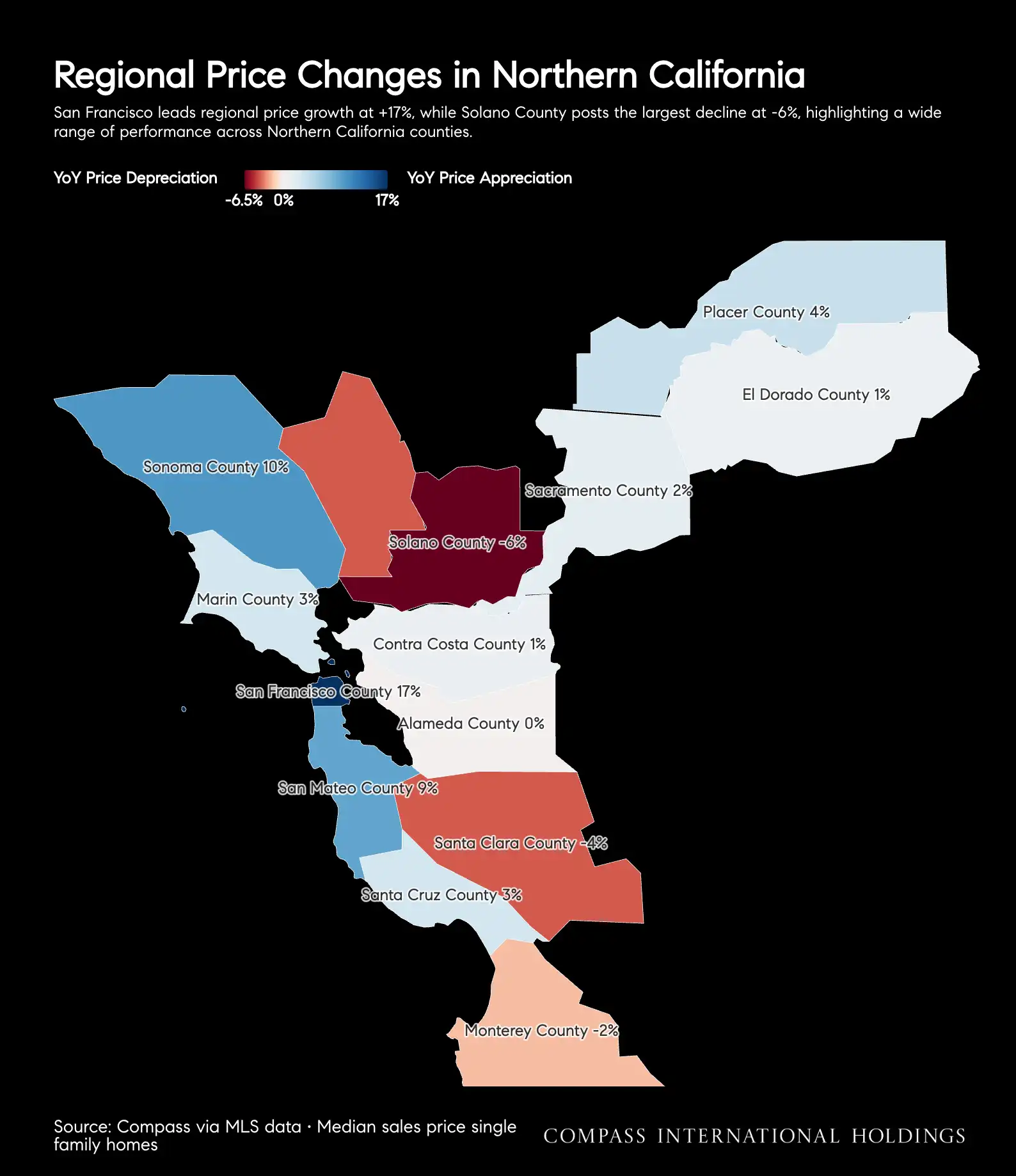
In September, county real estate markets across Northern California diverged based on available inventory. Regions with significant year-over-year declines in listings experienced increased competition and stronger pricing, whereas areas with inventory growth saw elevated buyer leverage and more frequent price reductions.
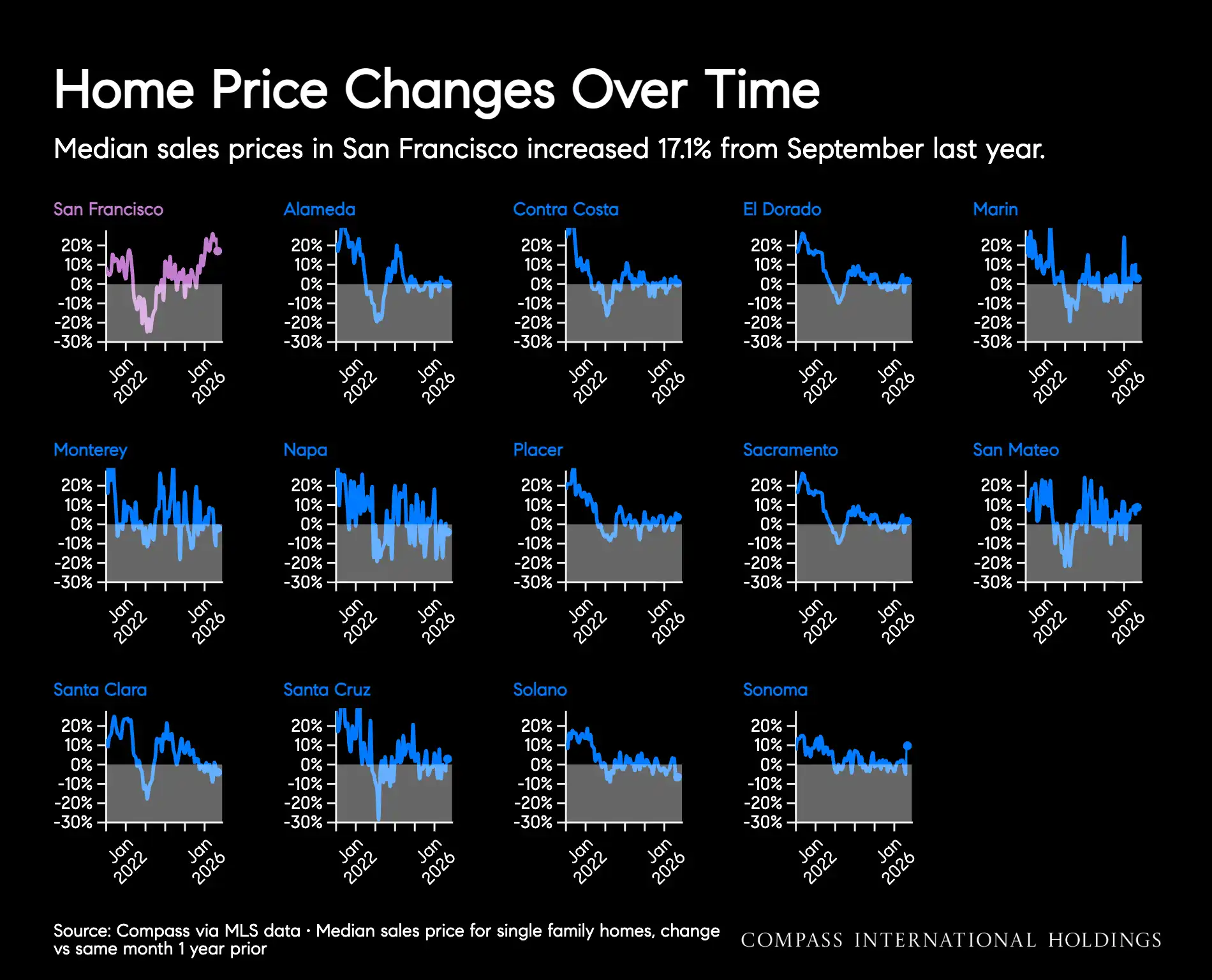
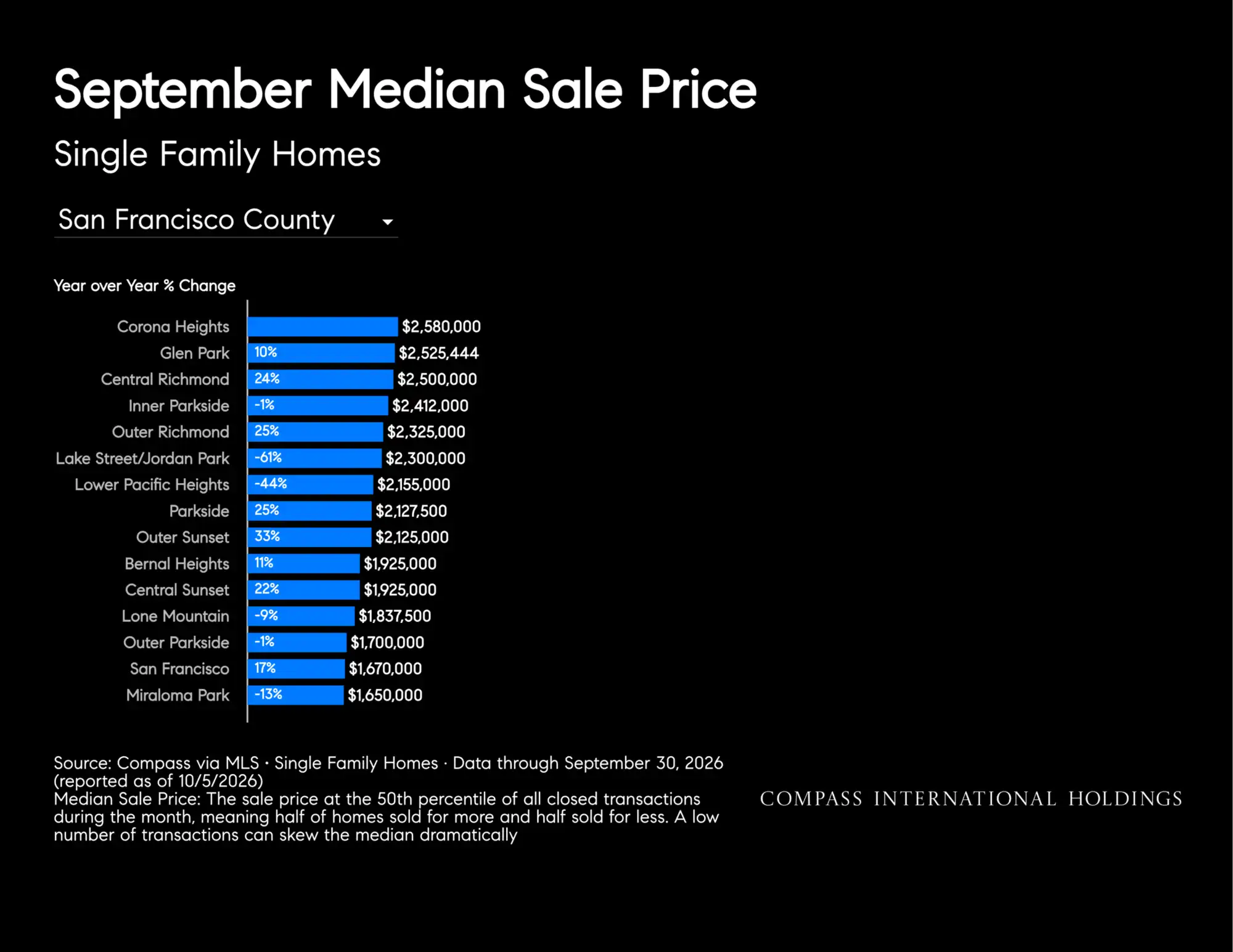
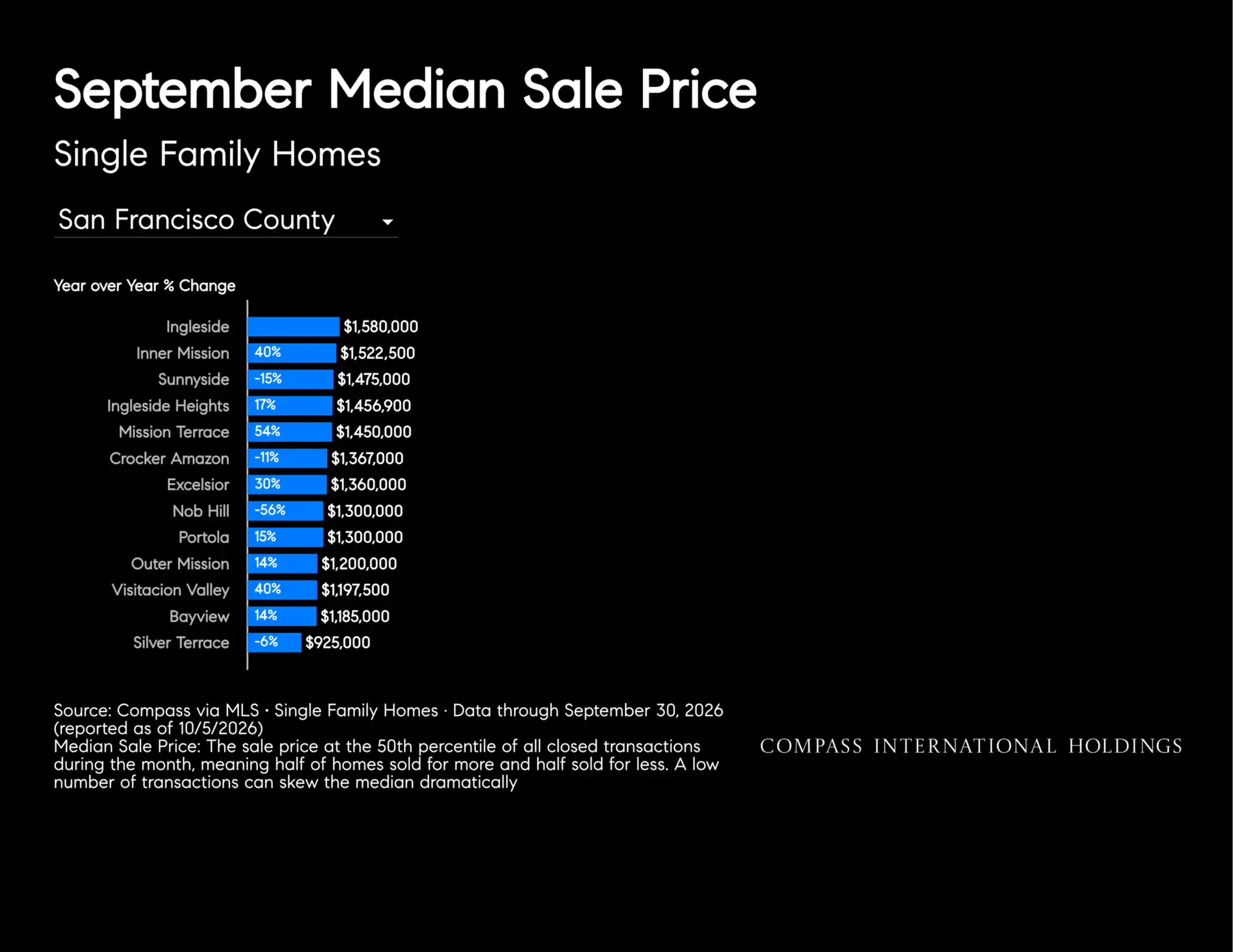
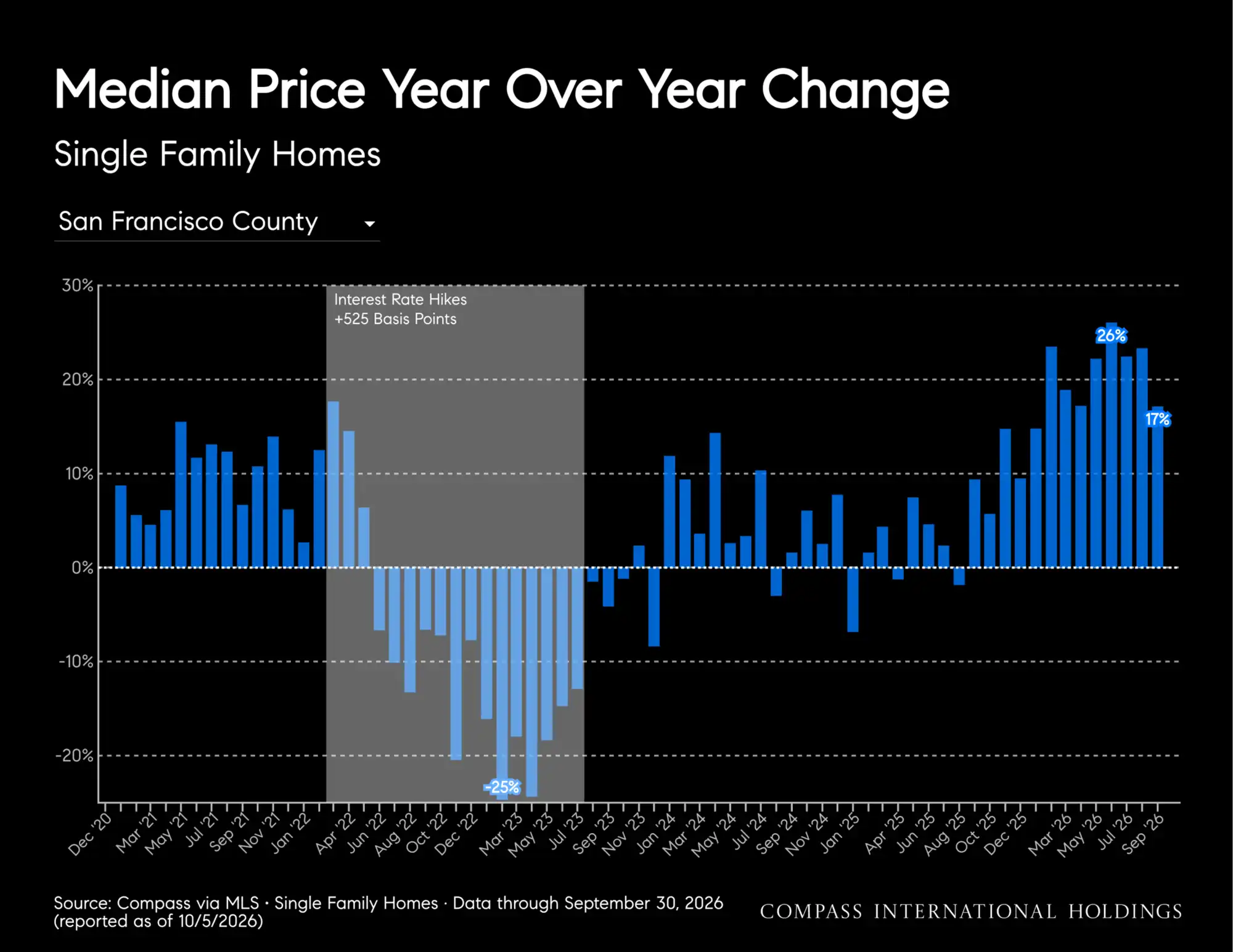
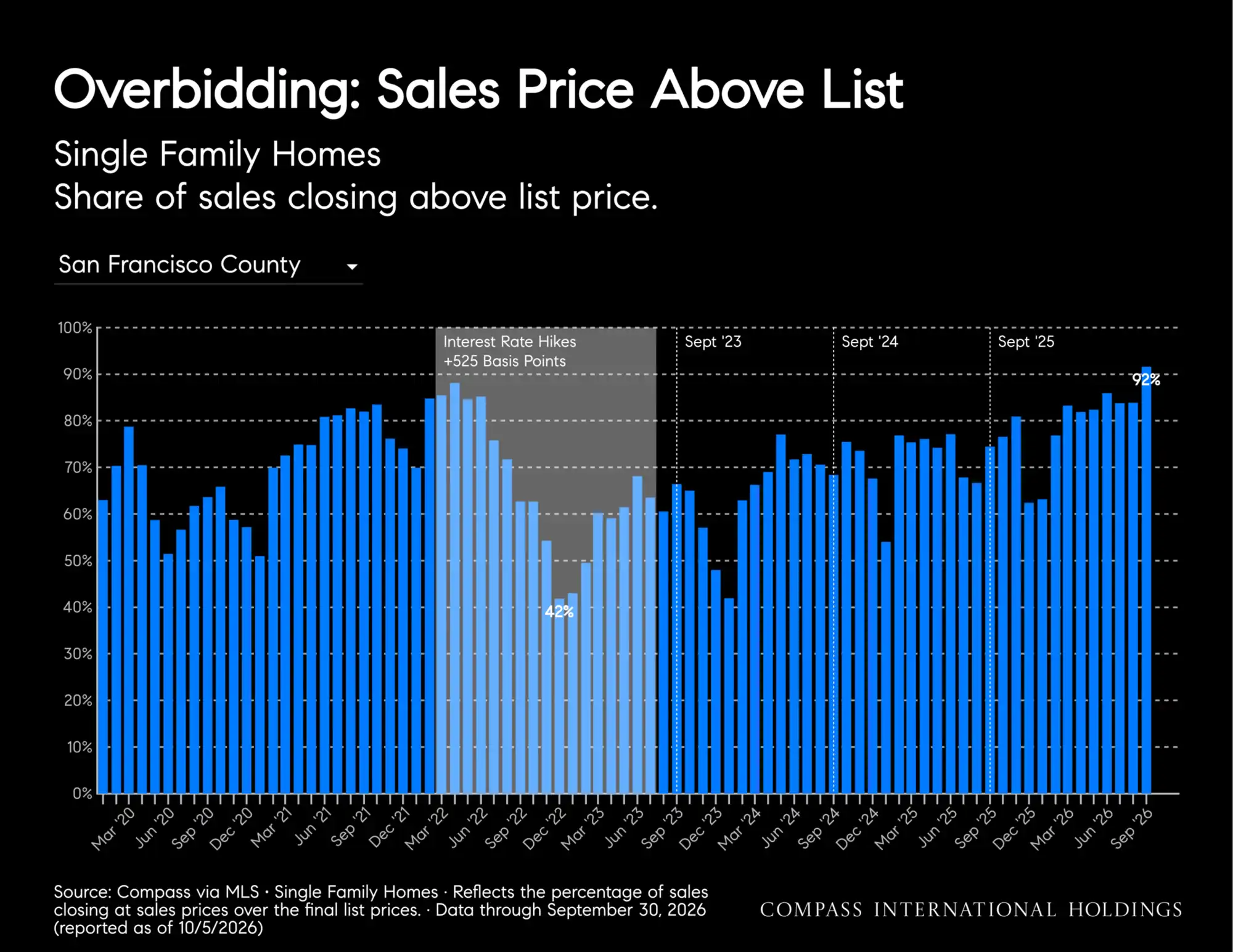
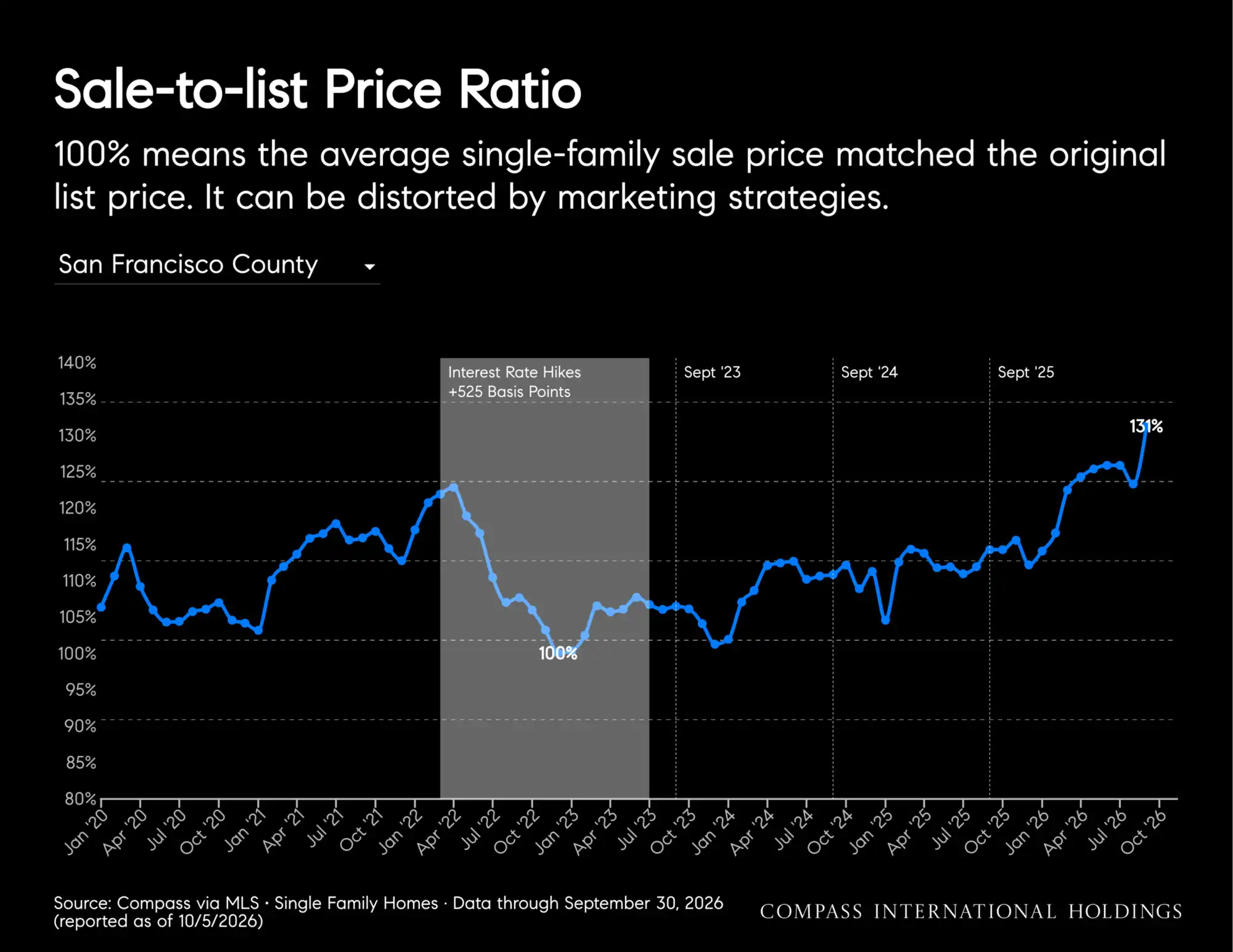
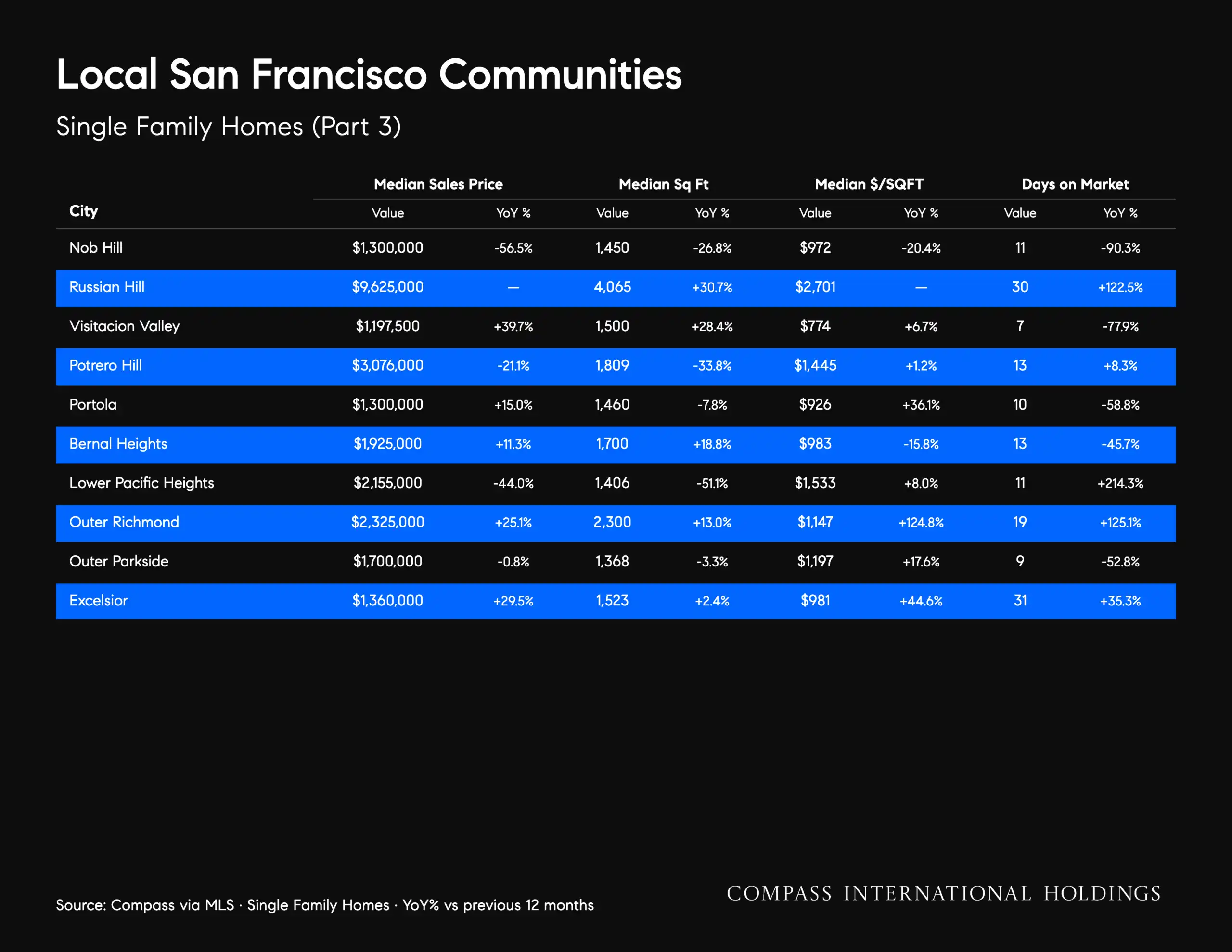
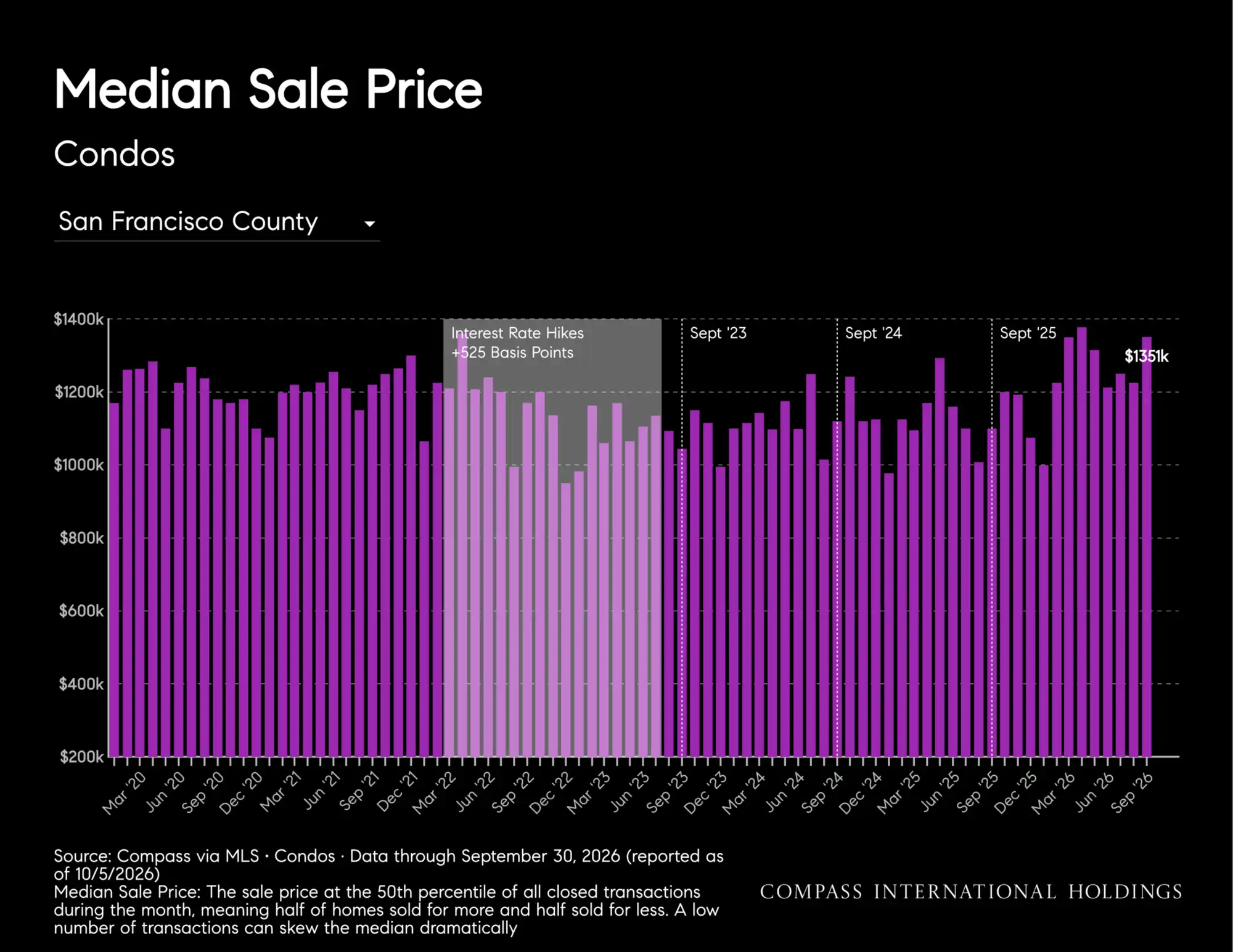
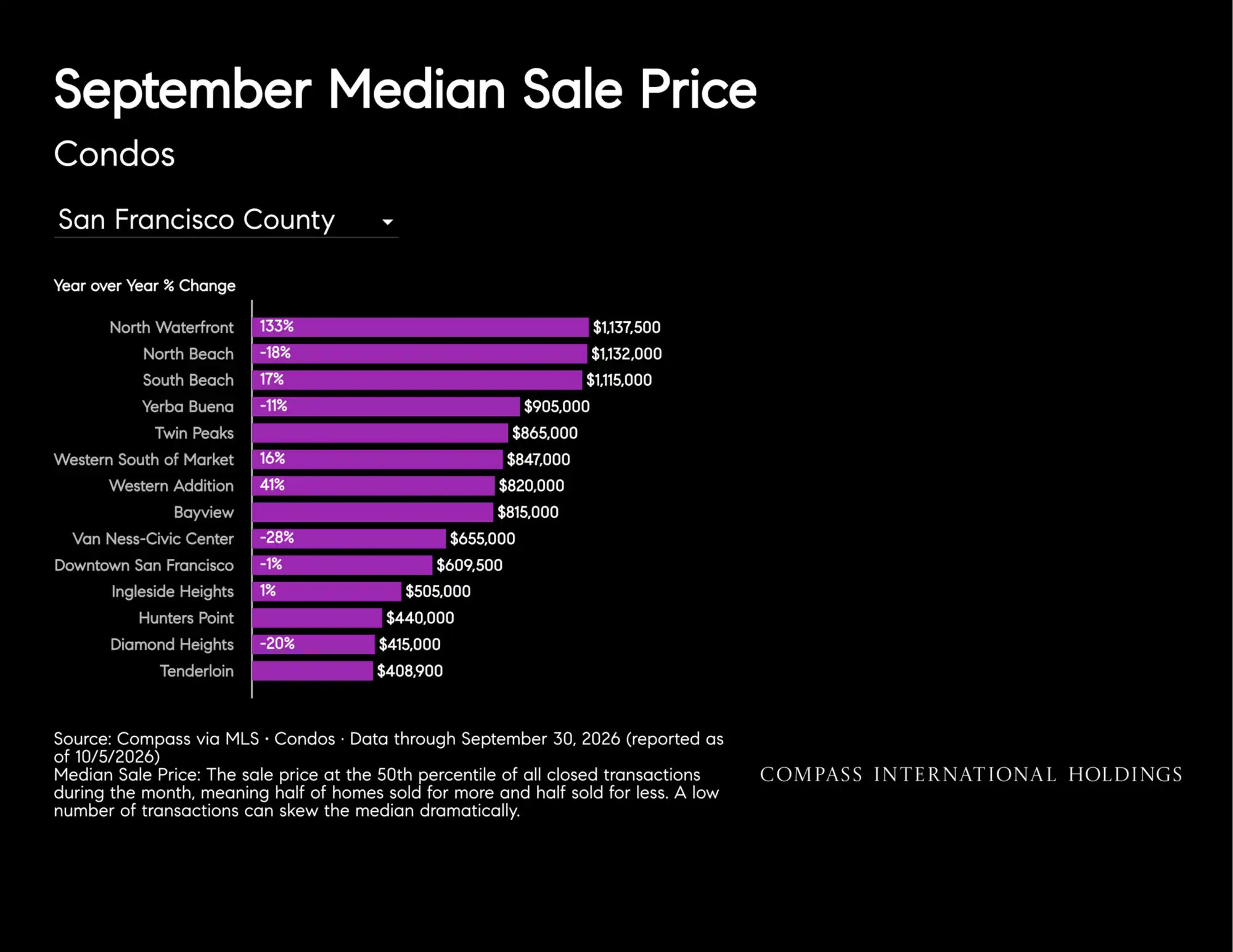
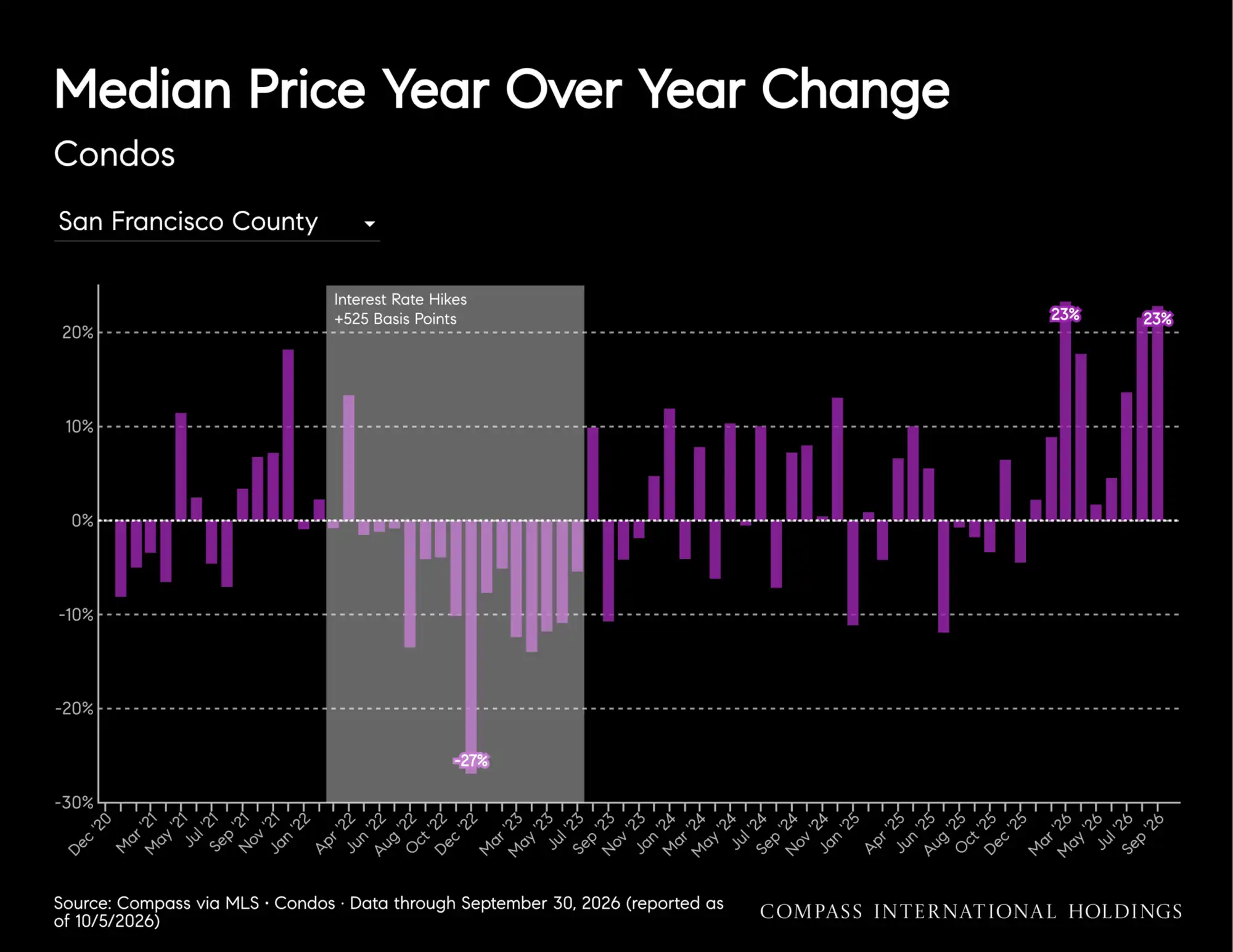
Markets that tightened significantly included San Francisco, San Mateo, Marin, Alameda, and Sonoma. San Francisco led the region in competitiveness, with 92% of single-family homes selling above list price and year-over-year median prices rising 17% for single-family homes and 23% for condominiums. In San Mateo, the median price increased 9%, supported by 63% of sales closing above list.
Contra Costa, Monterey, and Santa Cruz presented mixed conditions. Monterey recorded a 22% increase in closed sales alongside a 12% rise in active listings and a 2% minor contraction in median price. In Santa Cruz, sales volume held steady, though nearly half of all single-family listings underwent price reductions.
Softer market performance was observed in Santa Clara, Sacramento, Placer, El Dorado, Solano, and Napa. While Santa Clara maintained strong transaction velocity, active listings expanded by 15%, price cuts rose by 49%, and the single-family median dropped 4%. In the greater Sacramento region, moderating transaction volumes coincided with expanding inventory, driving price reduction increases of 34% in Sacramento, 37% in Placer, and 32% in El Dorado (where supply expanded to 4 months).
Condominium market performance generally lagged single-family properties across most counties. San Francisco stood out as a notable exception, where the share of condos selling above list rose 27 percentage points to 66%; condo market conditions also improved in Alameda and San Mateo.
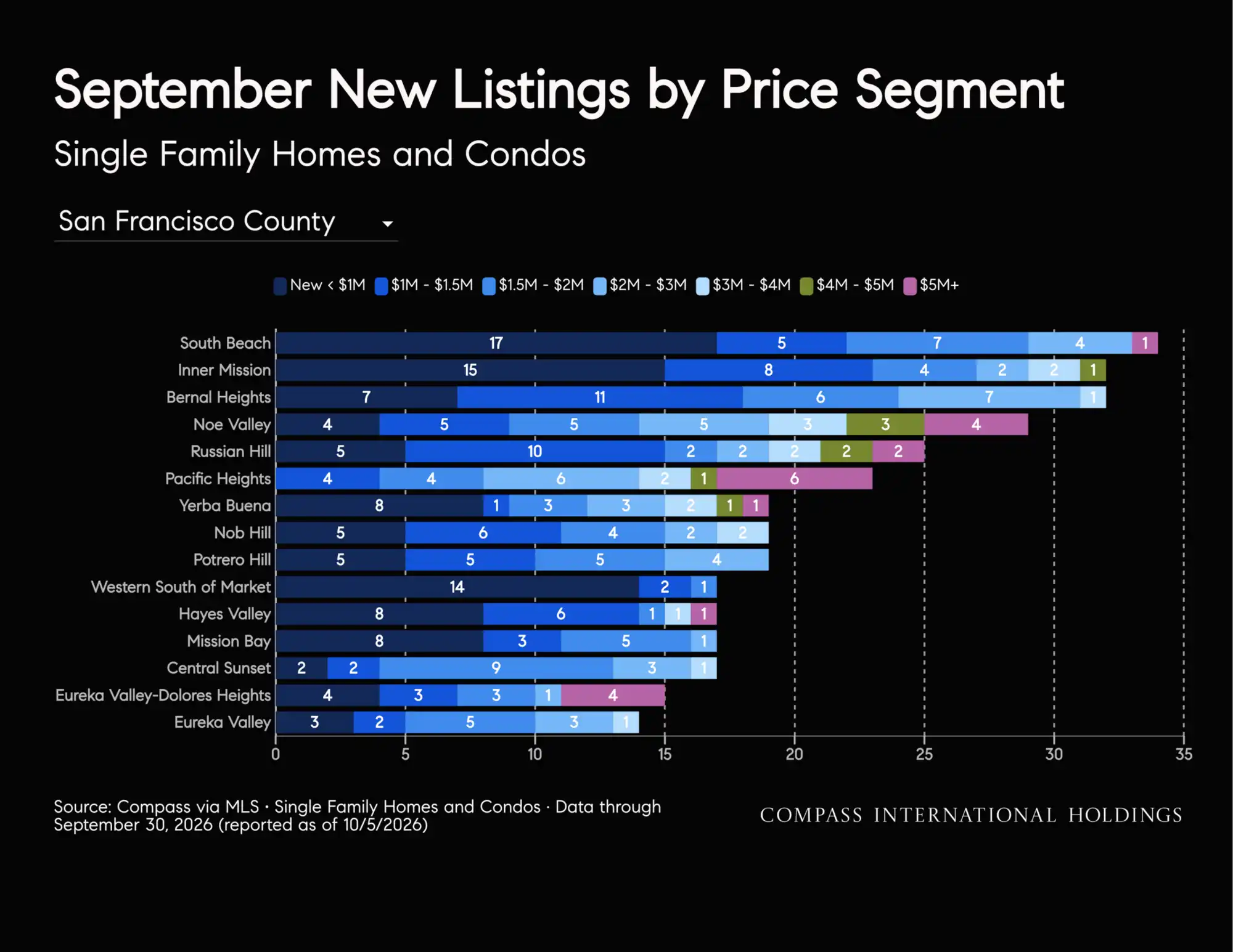
October Outlook: Seasonal fall inventory is entering the market, including in high-demand areas. Month-over-month new single-family listings increased 62% in San Francisco and 17% in San Mateo from August. The rate at which buyers absorb this new inventory will determine if recent momentum carries into the fourth quarter. In softer markets, the ongoing frequency of price cuts will indicate whether sellers are successfully adjusting expectations to align with shifting buyer leverage.
San Francisco Market
How to Read This Report:
County and Submarket Guidance
This October 2026 report is one of 18 markets in Northern California covering 13 counties and 5 submarkets. Each report includes a summary comparing September 2026 with September 2025 (YoY) and August 2026 (MoM).
This report is organized by property type, with single-family and condo metrics presented separately. Single-family median sale price and closed sales time-series charts have been formatted for easier reading.
- Source: Compass via MLS; data exported 10/6/2026, with data through 10/5/2026.
- Please note, data for September is preliminary: Late MLS reporting may add closings for approximately two weeks after month-end.
- Small samples: Results for markets with fewer than 30 closings per year should be interpreted with caution.
Report contents
- Market Summary & Map
- Single-Family Market Metrics
- Single-Family Competition
- Condo Market Metrics
- Inventory & Supply
- Price Reductions
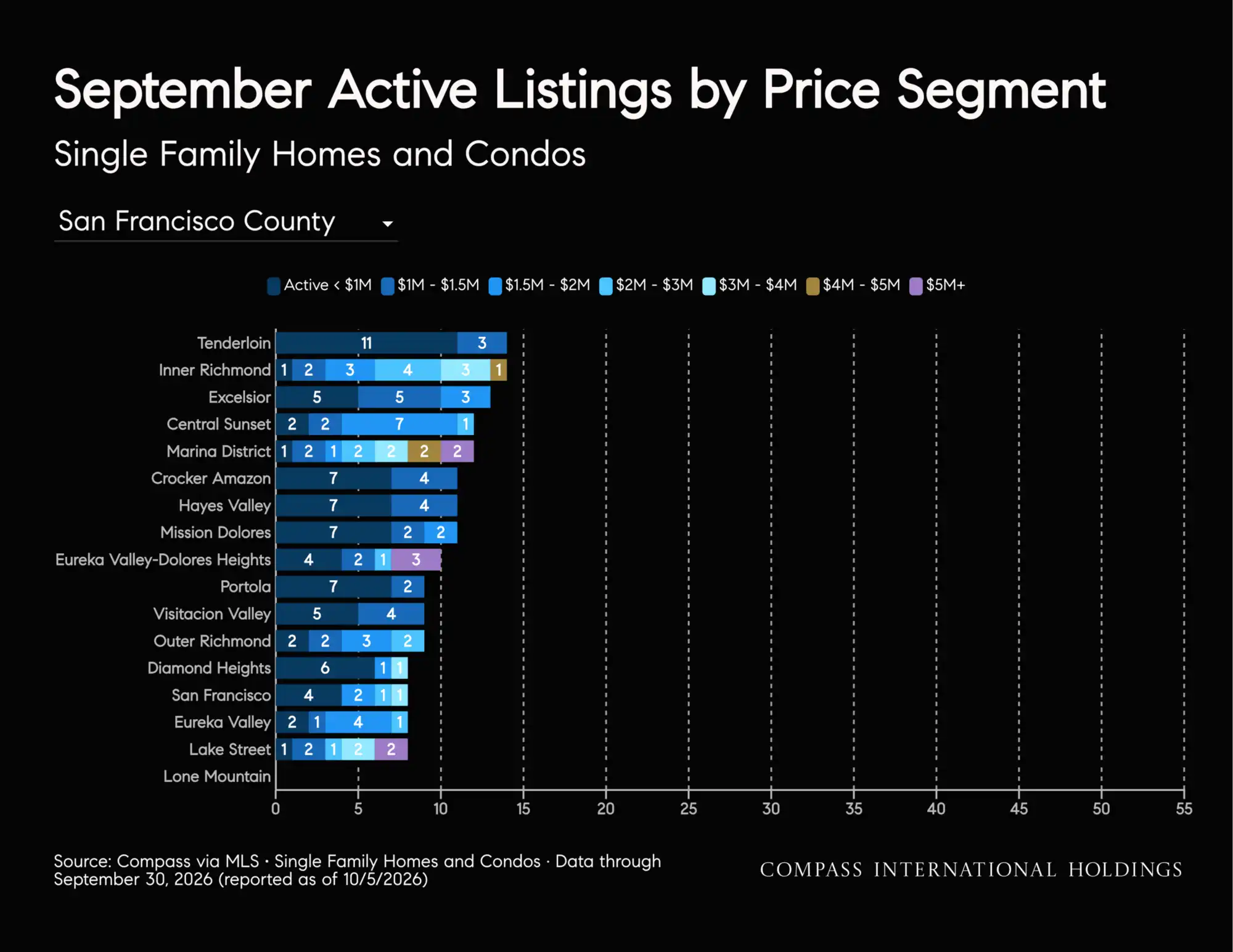
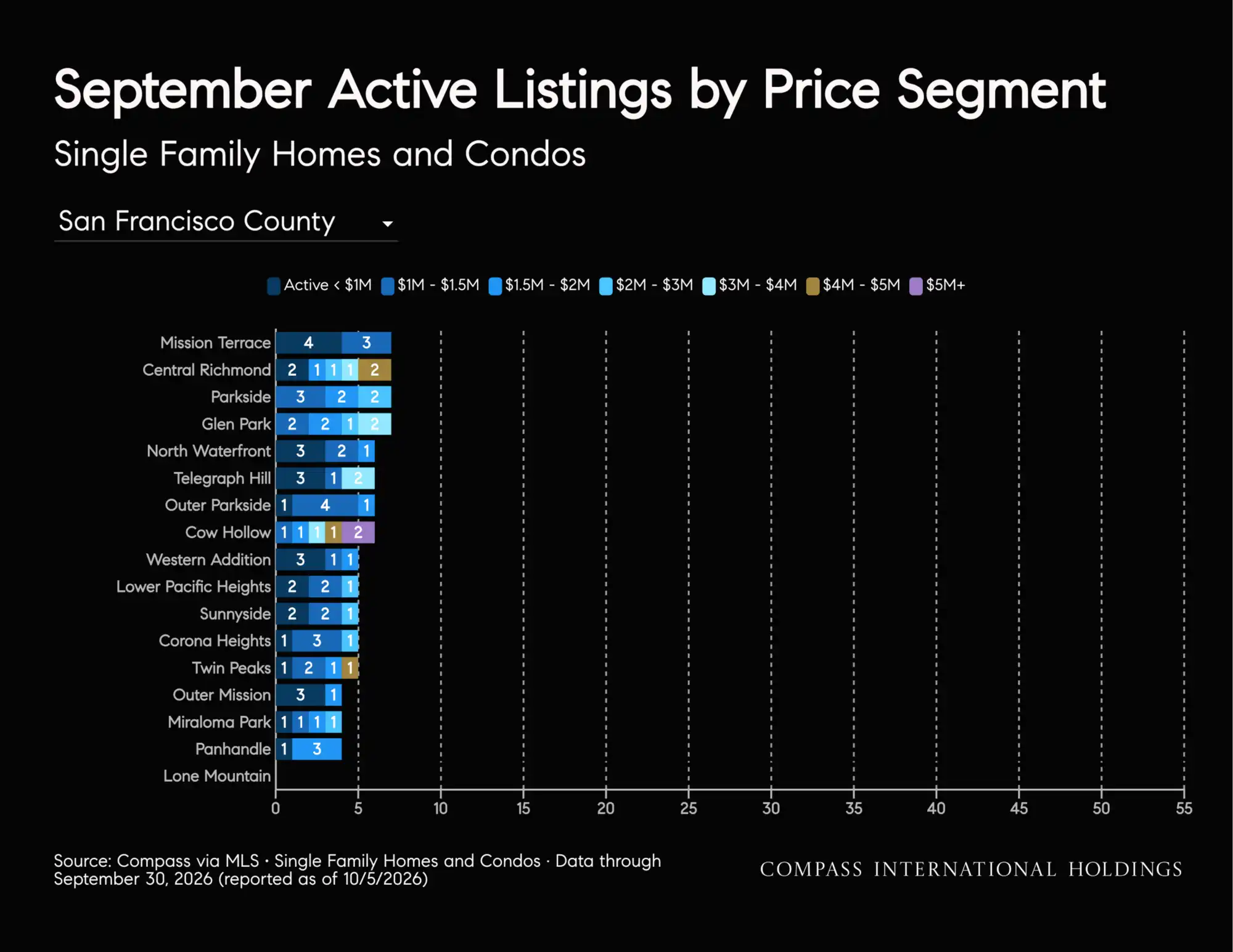
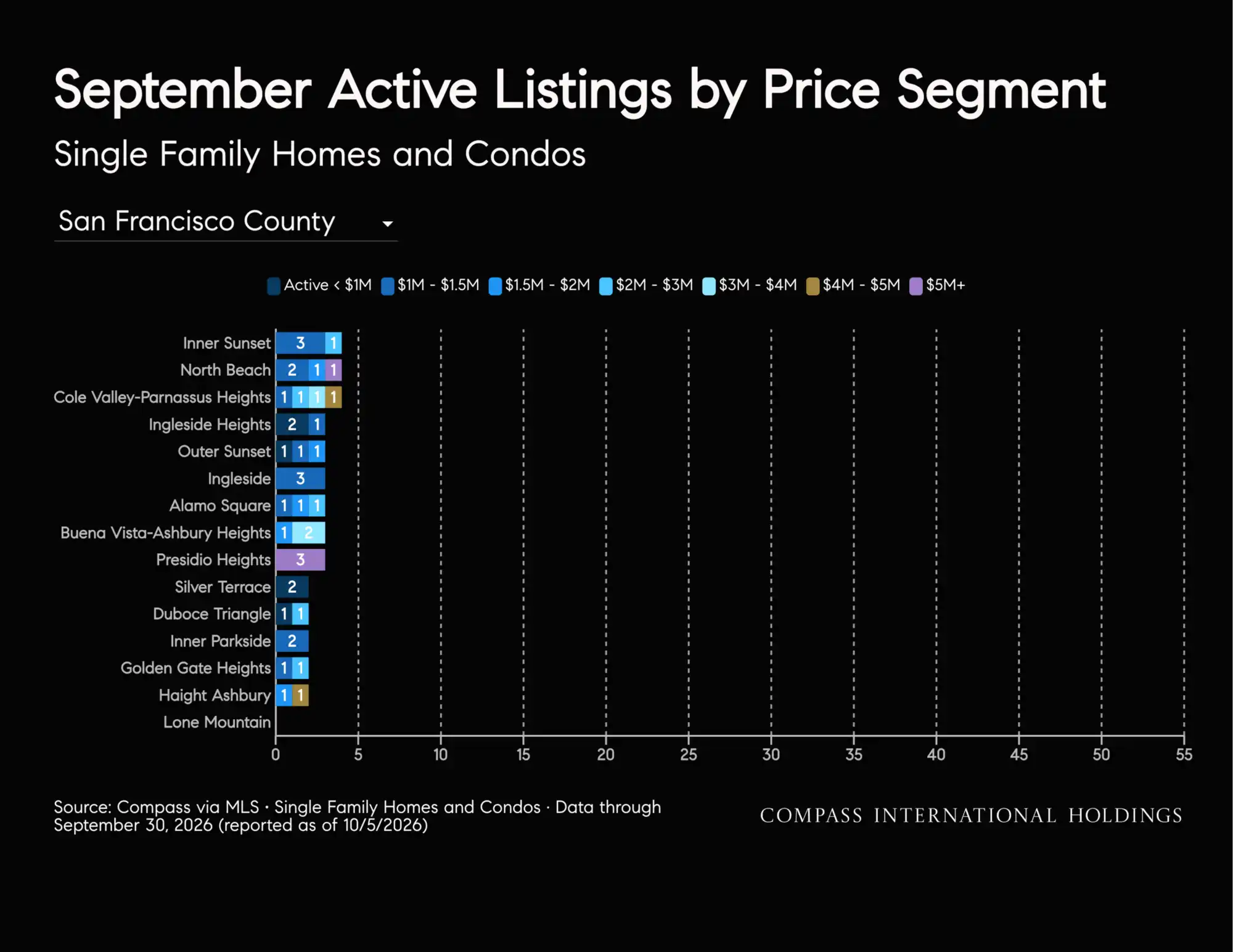
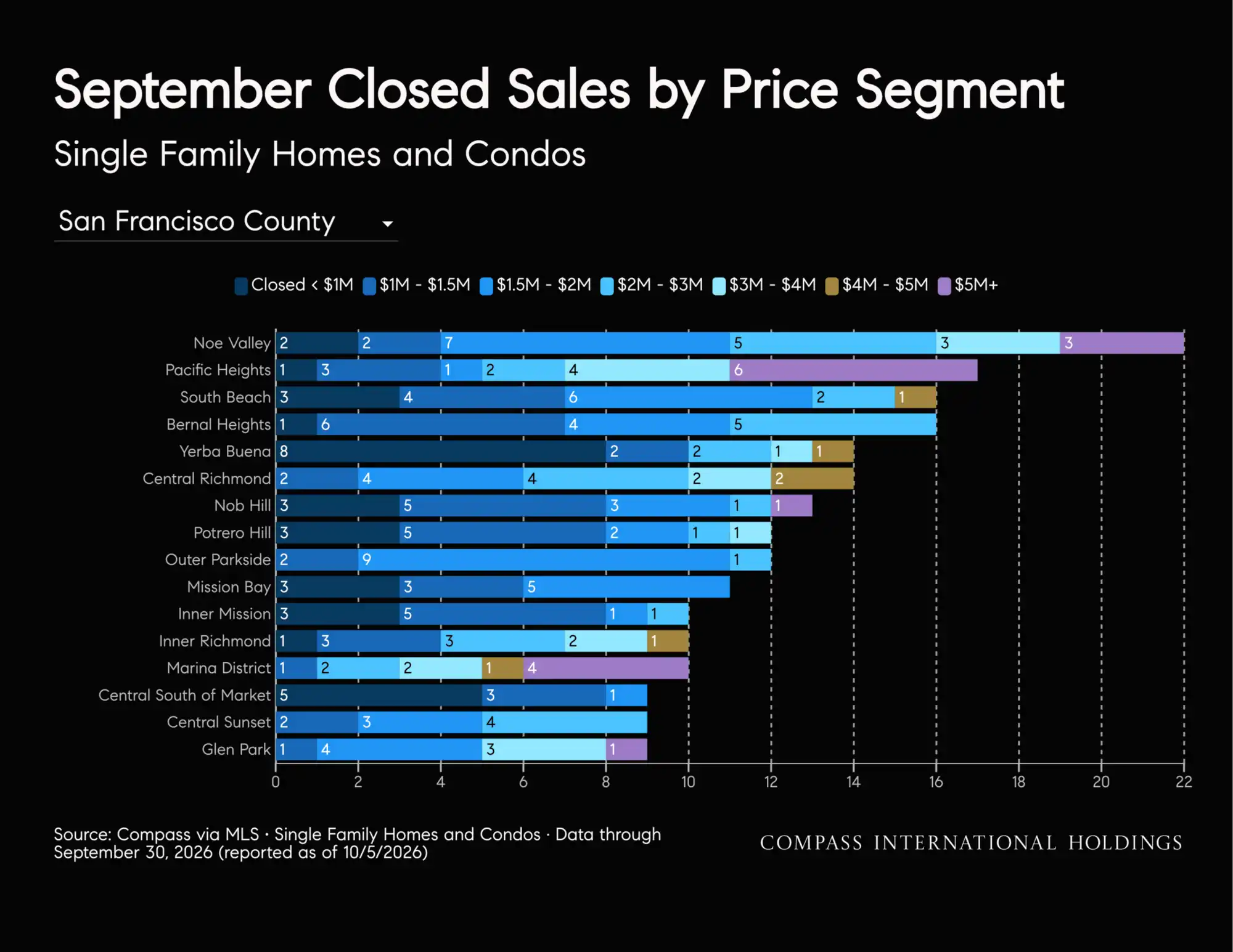
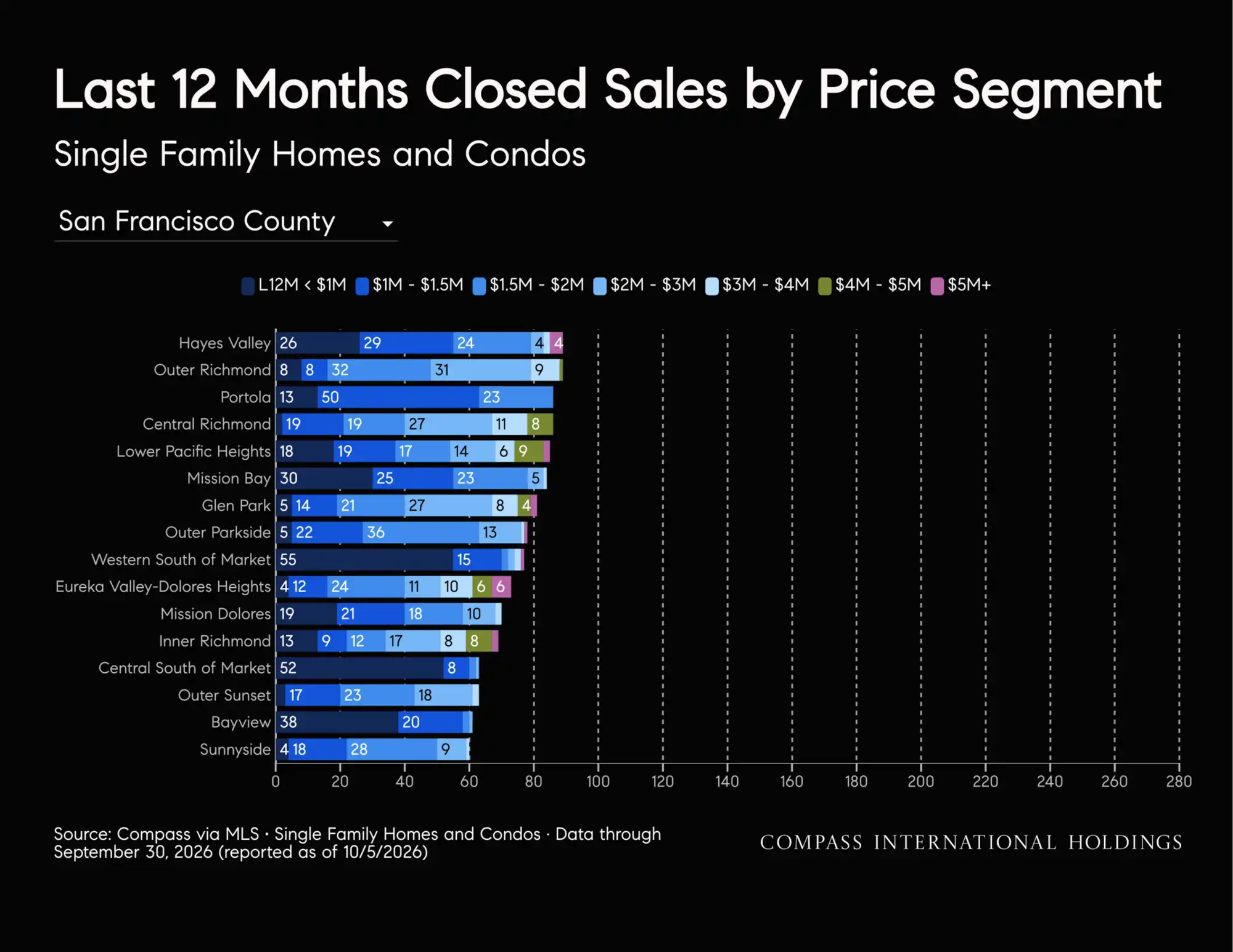
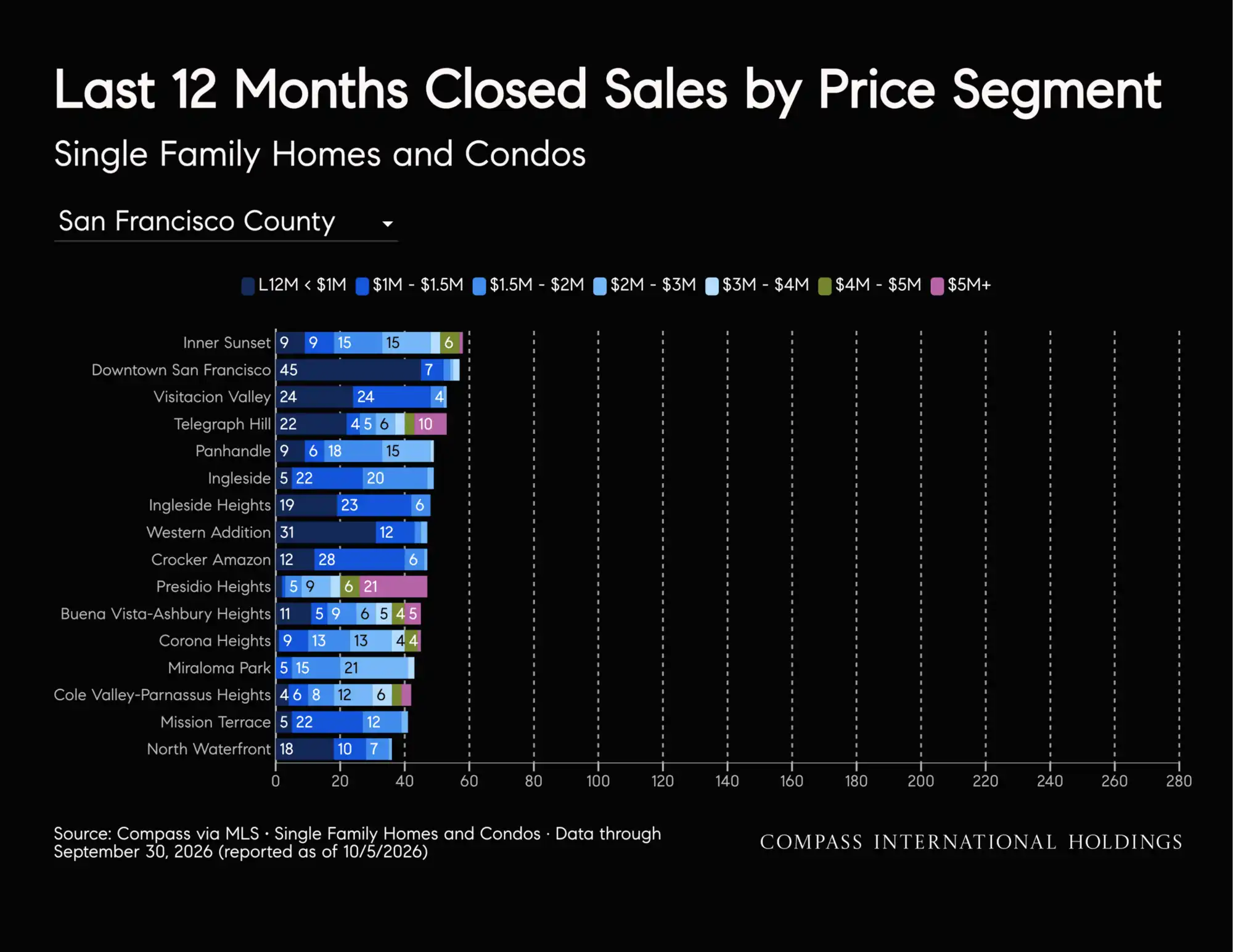
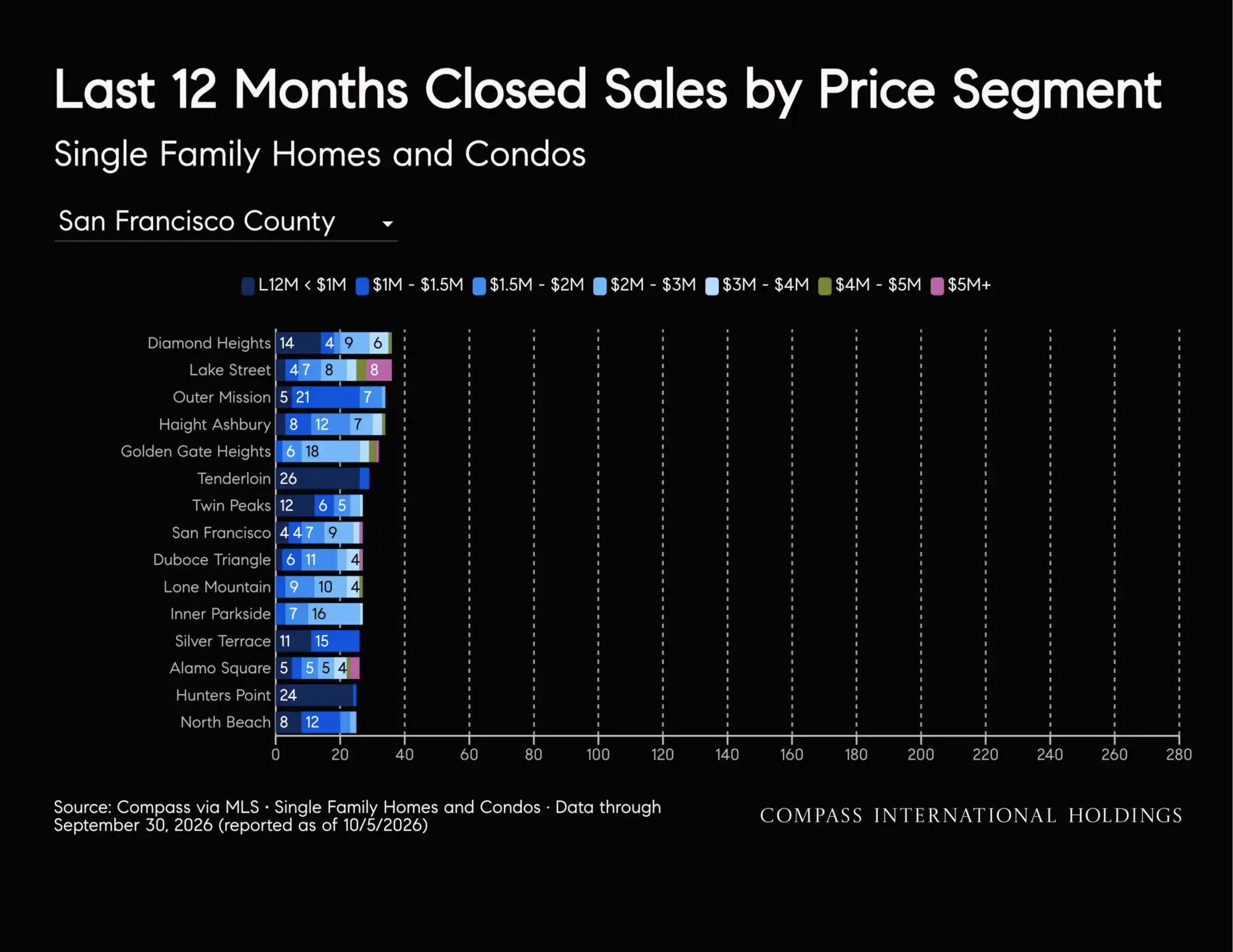
- Market Metrics by Price Segment
- Market Tables
- Forward-Looking Macro Trends
- Bay Area Macro Overview
- National Market Trends
San Francisco Recap
Overall Market Sentiment
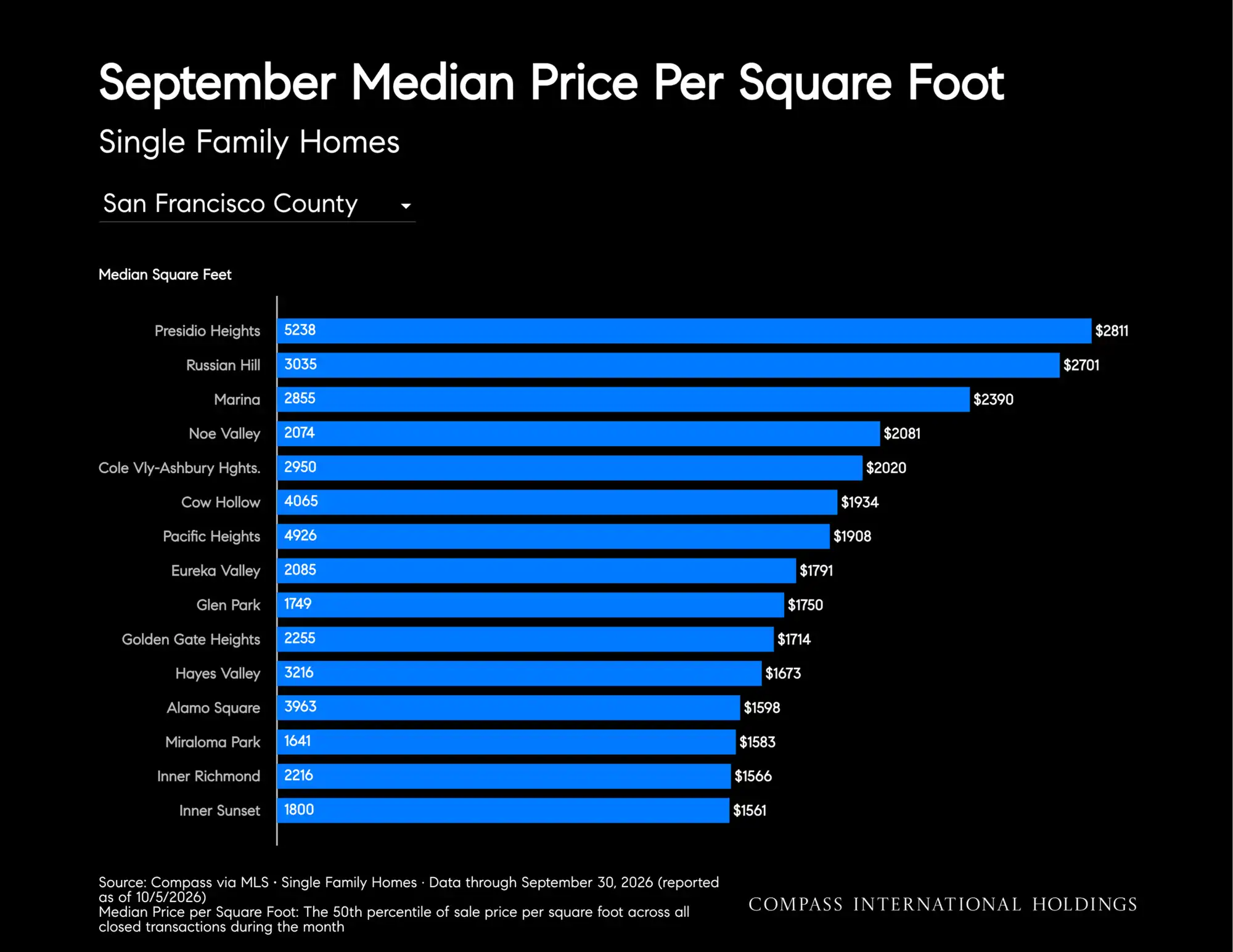
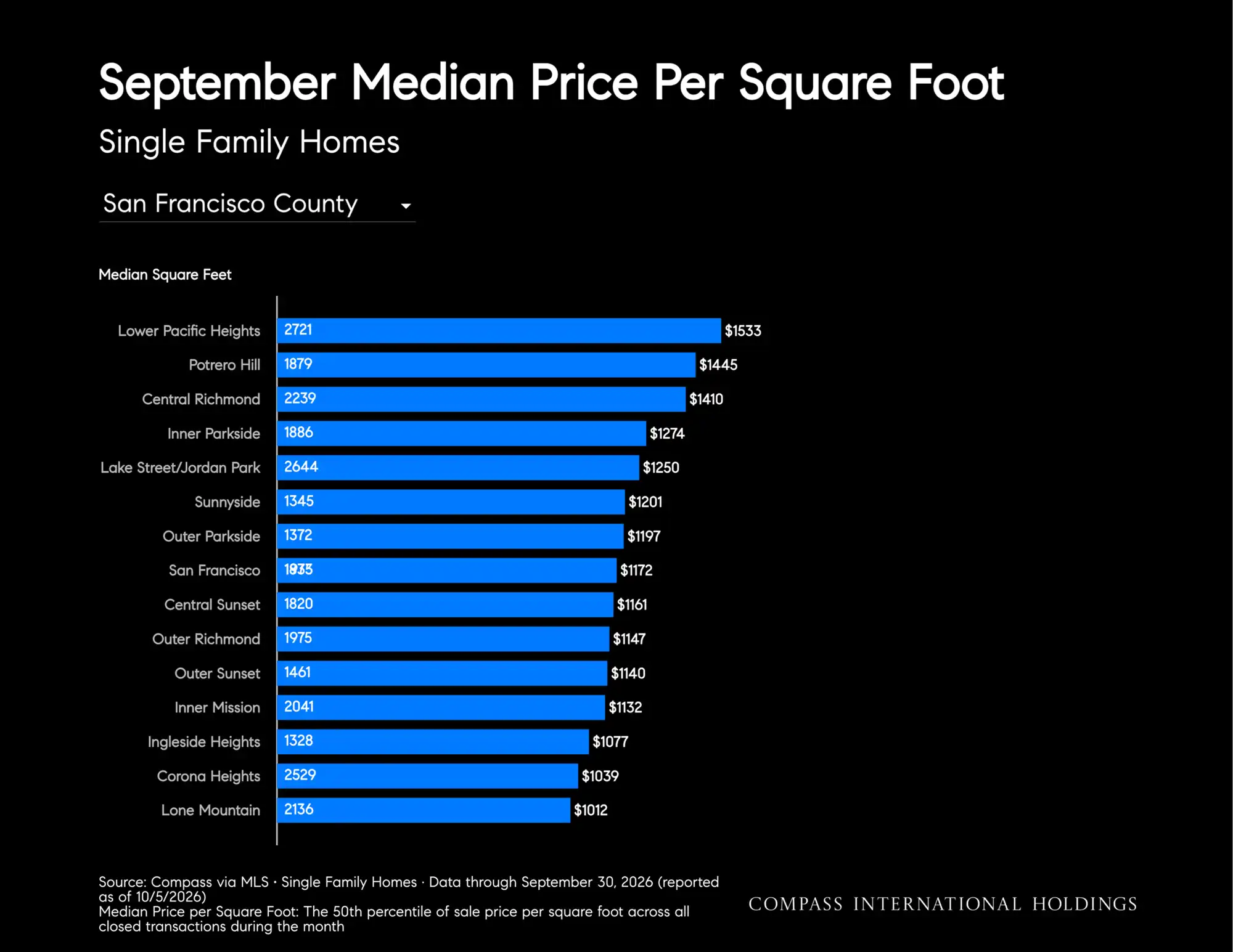
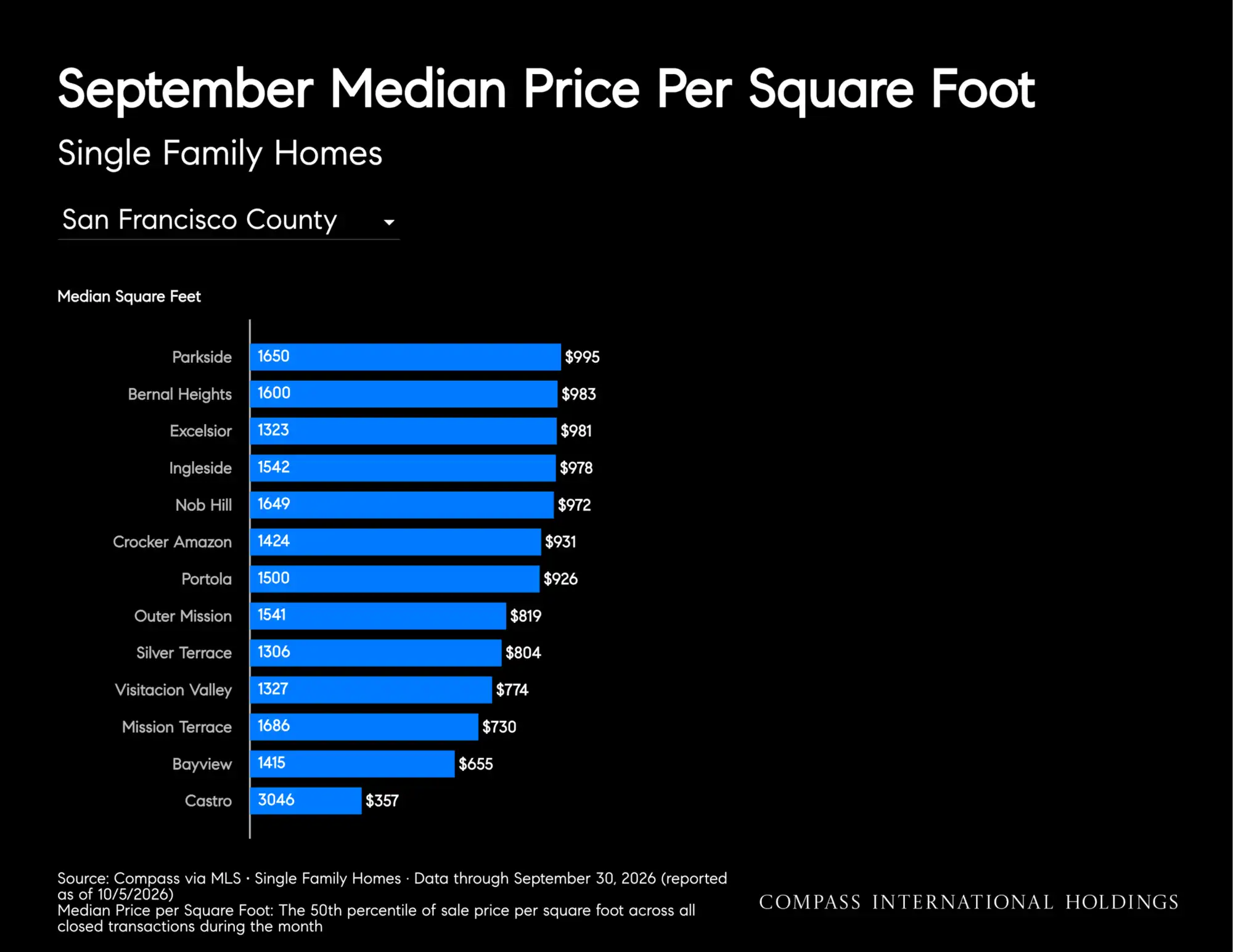
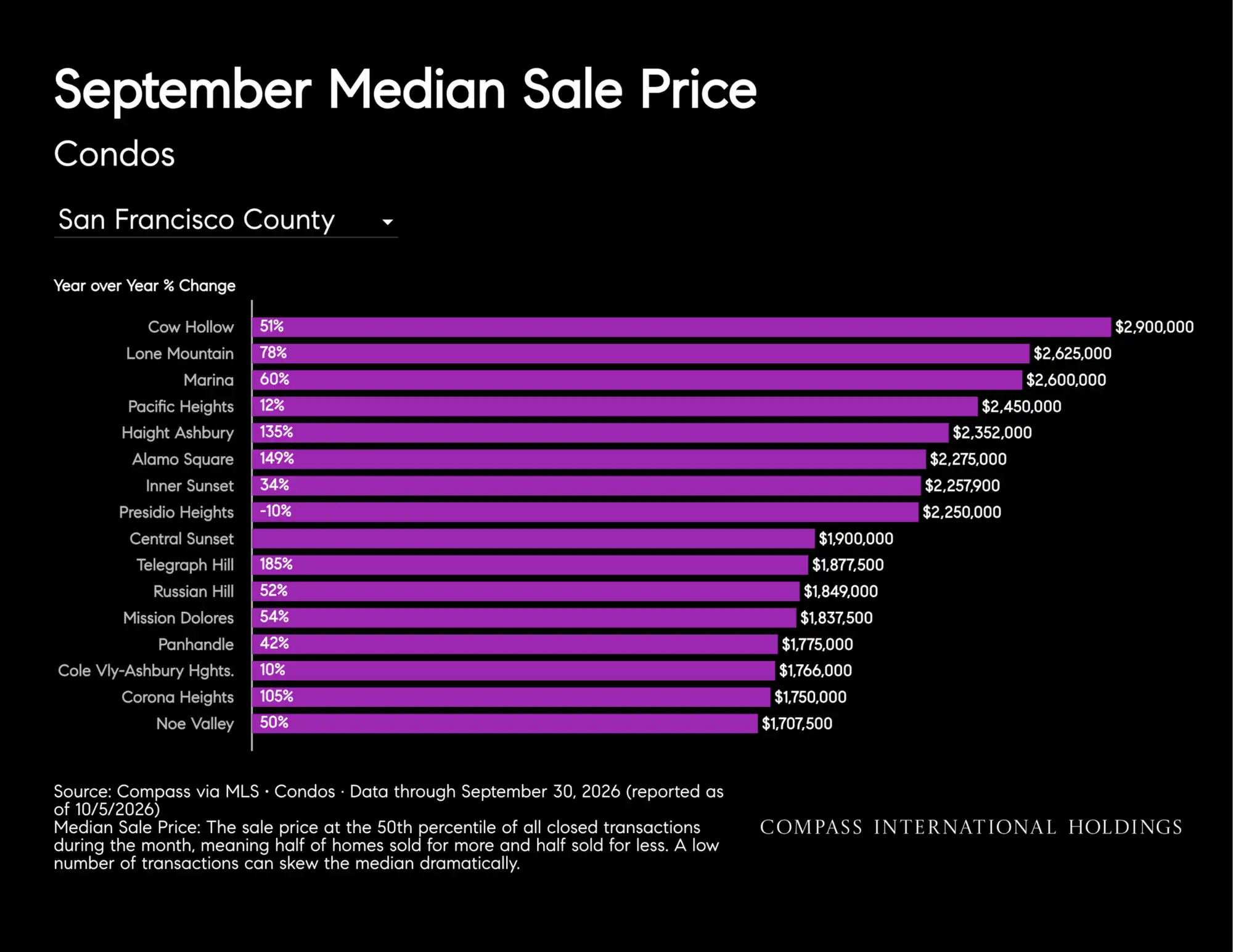
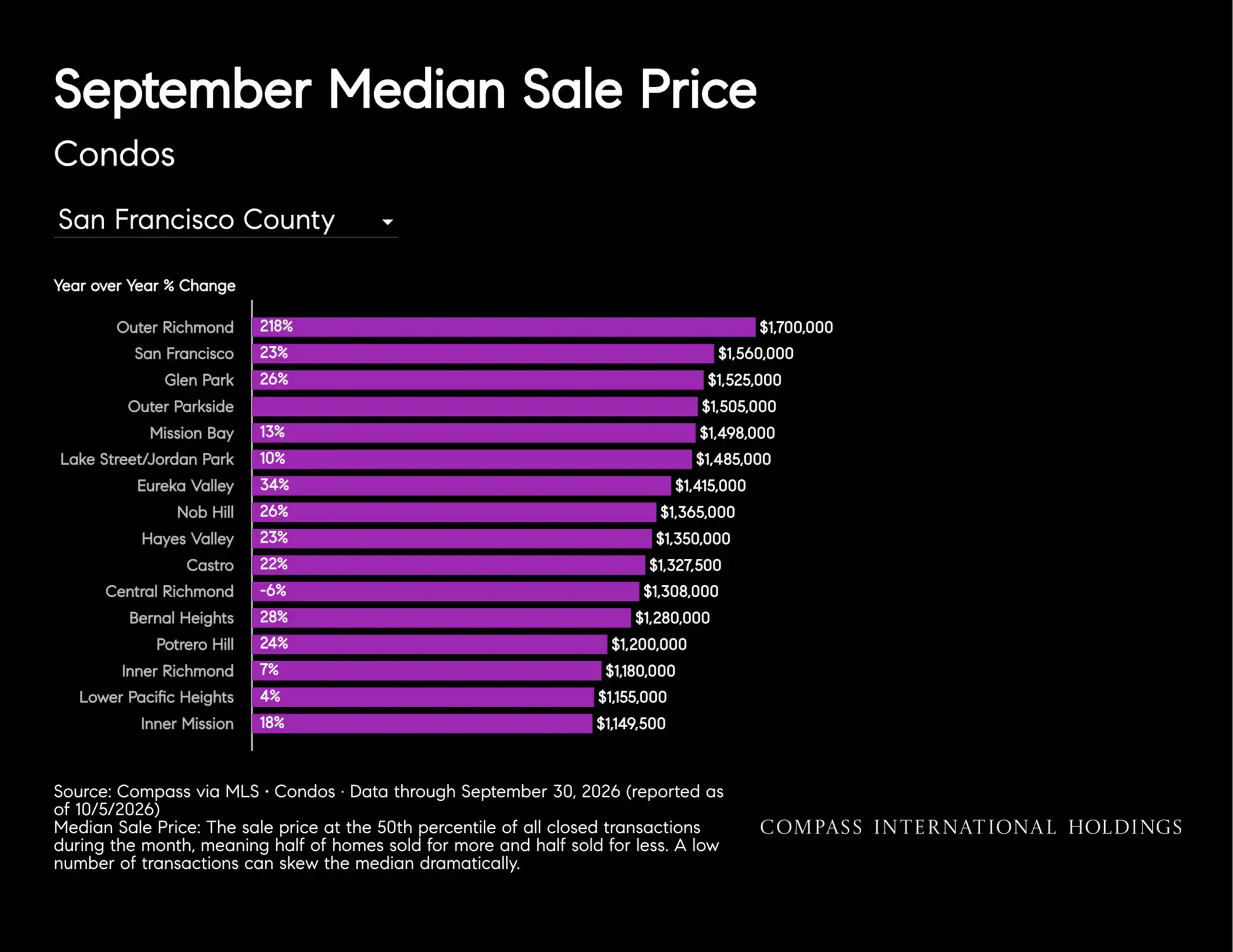
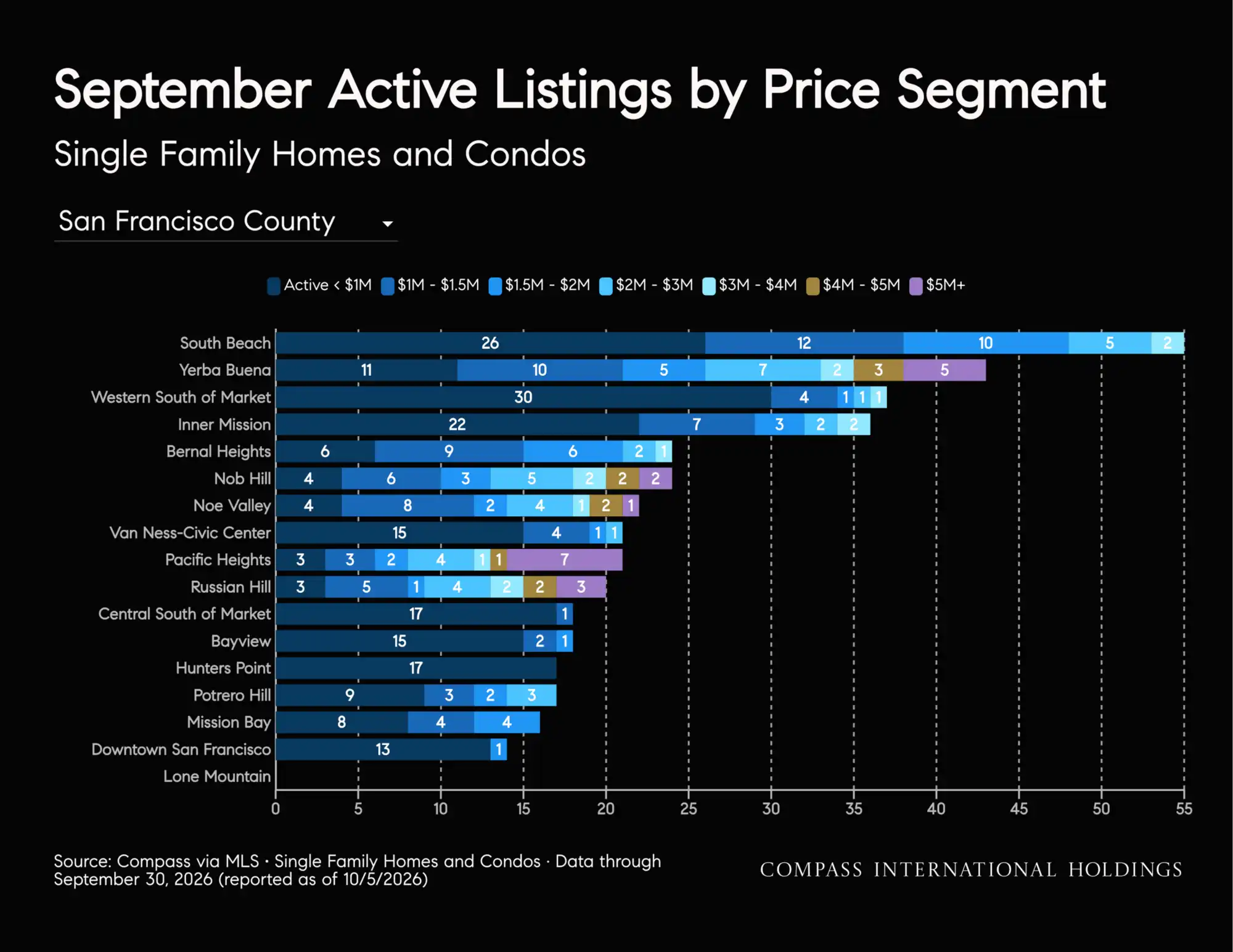
San Francisco strengthened sharply in September, with houses and condos competing for less inventory. Active listings were 18% lower for houses and 33% lower for condos than a year ago, while overbidding surged and both medians rose more than 15%. It is the most competitive market in the region, and the condo recovery is now as clear as the single-family one.
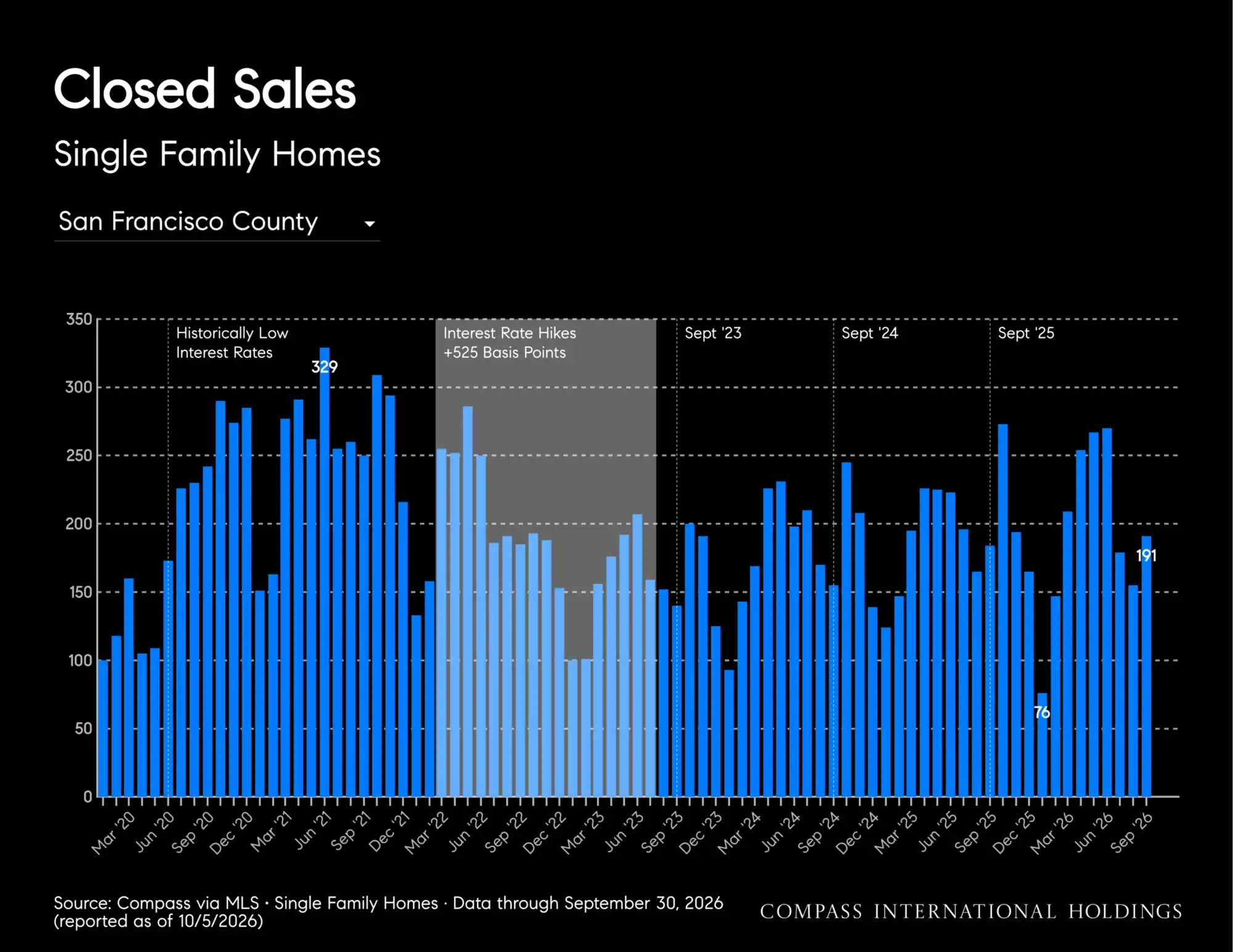
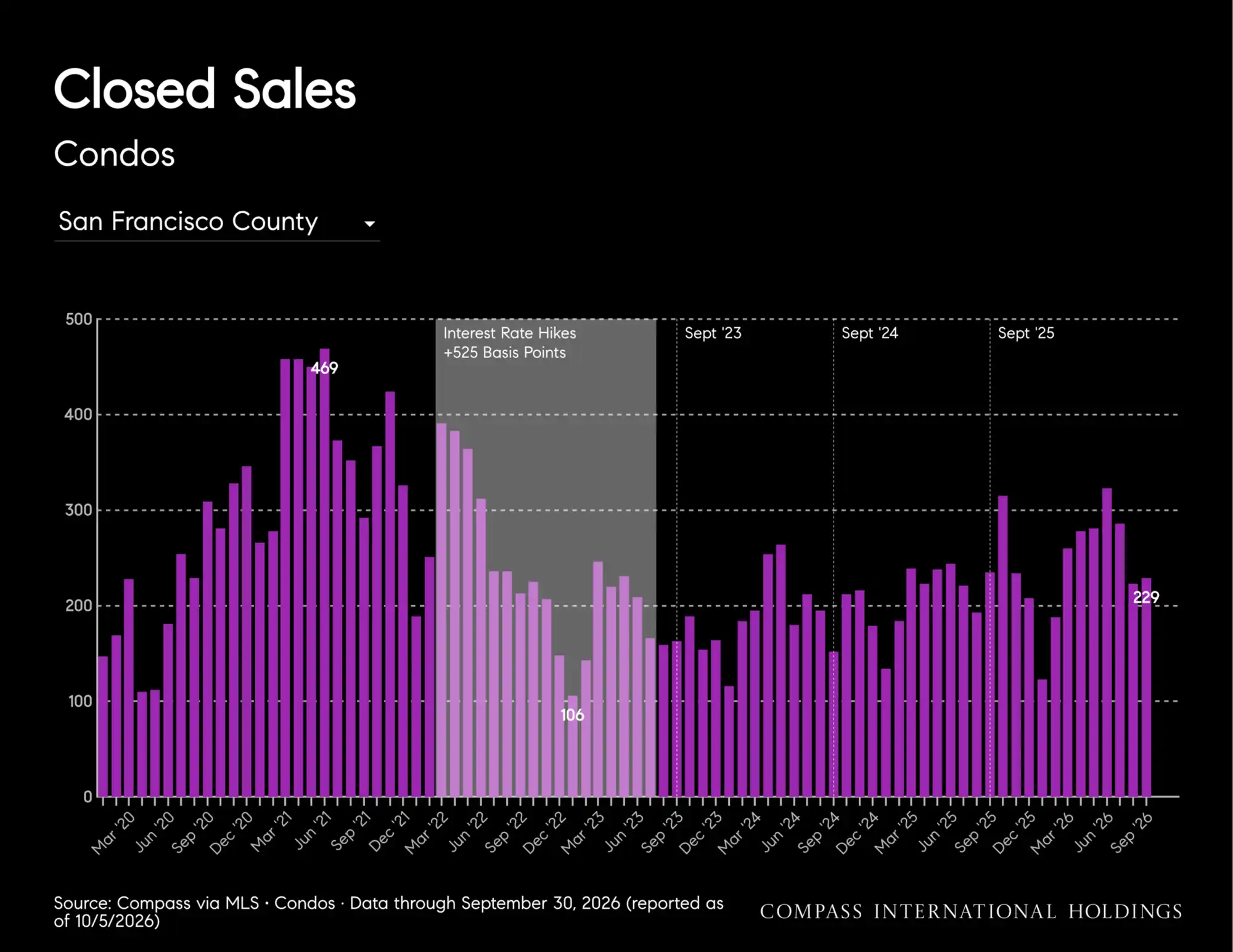
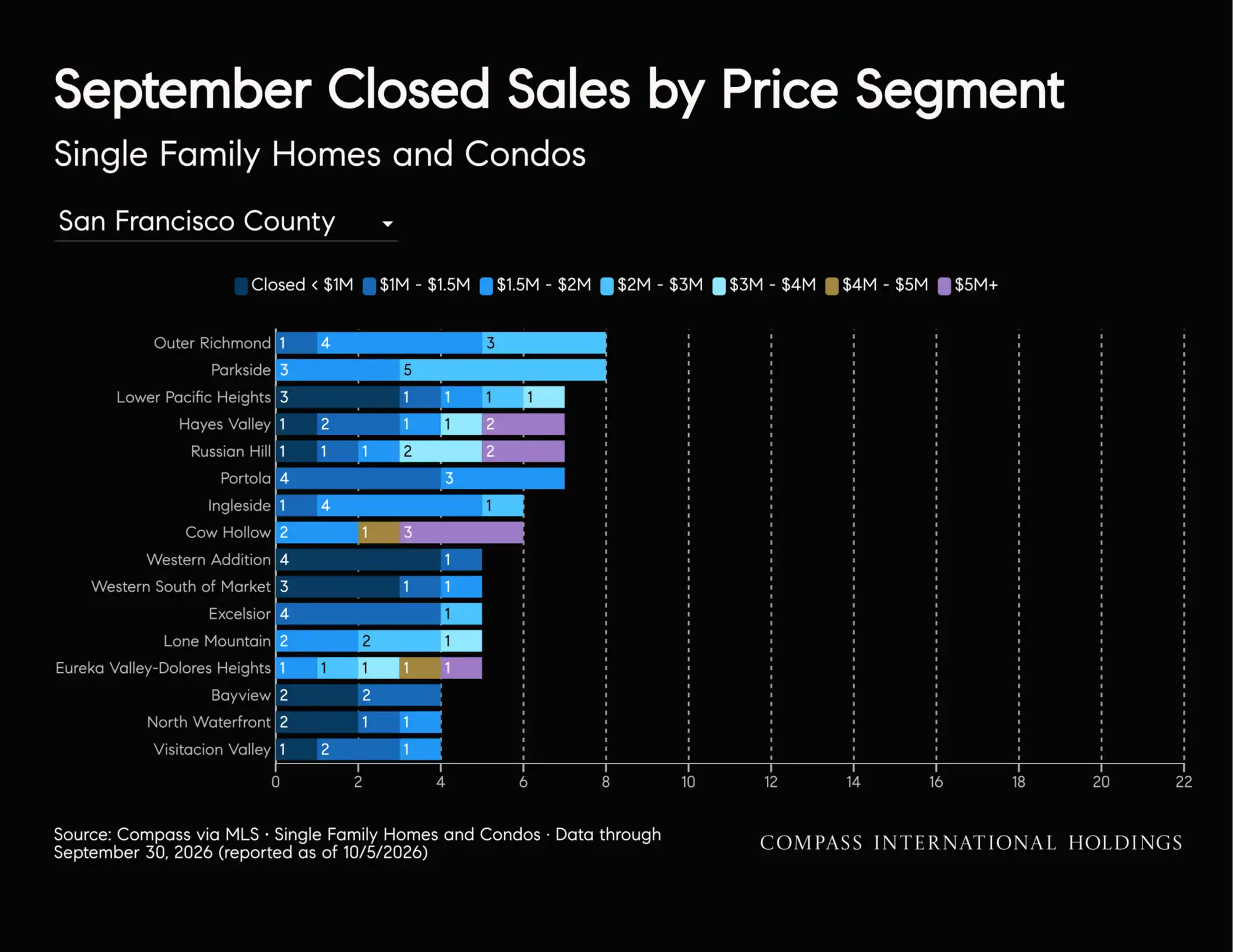
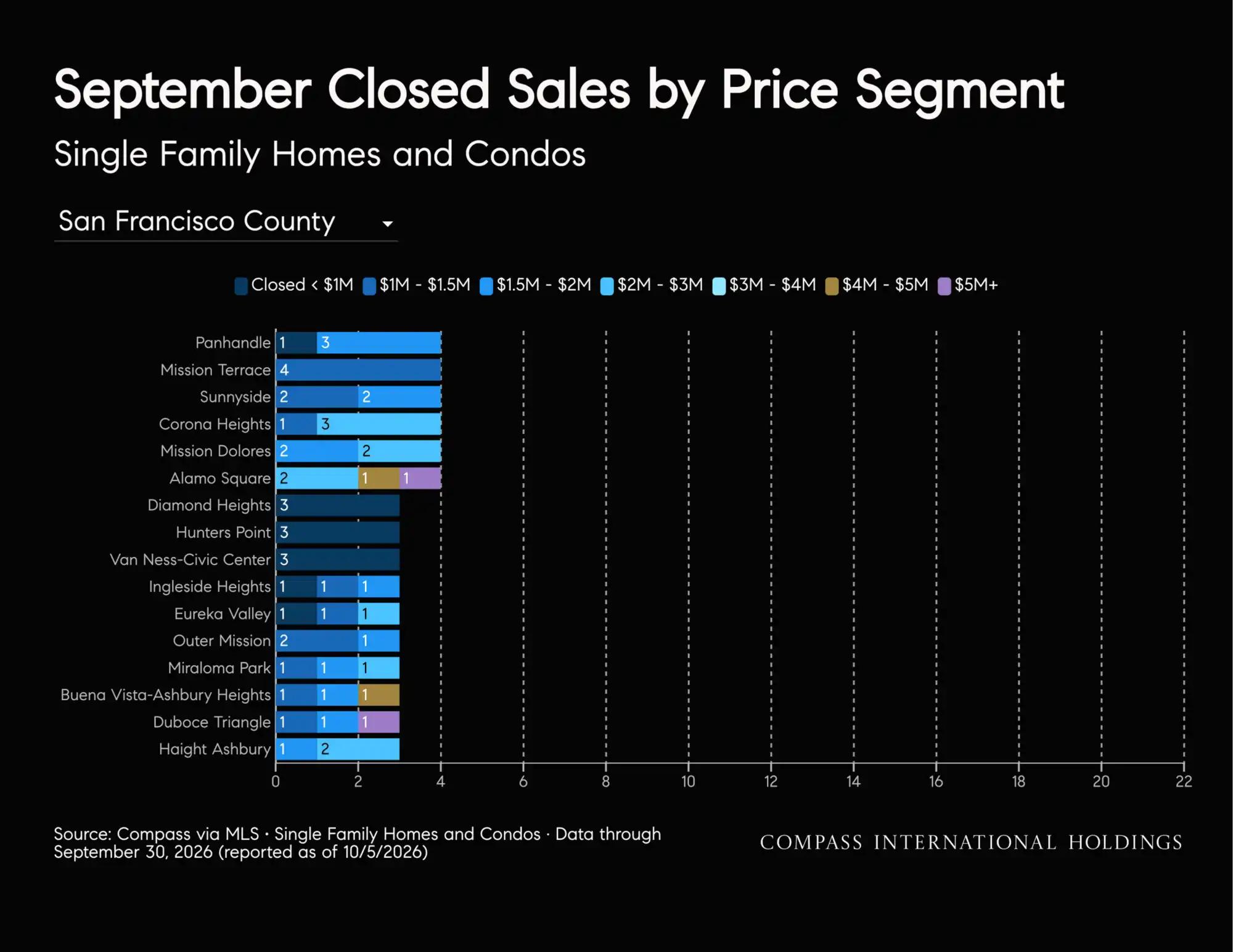
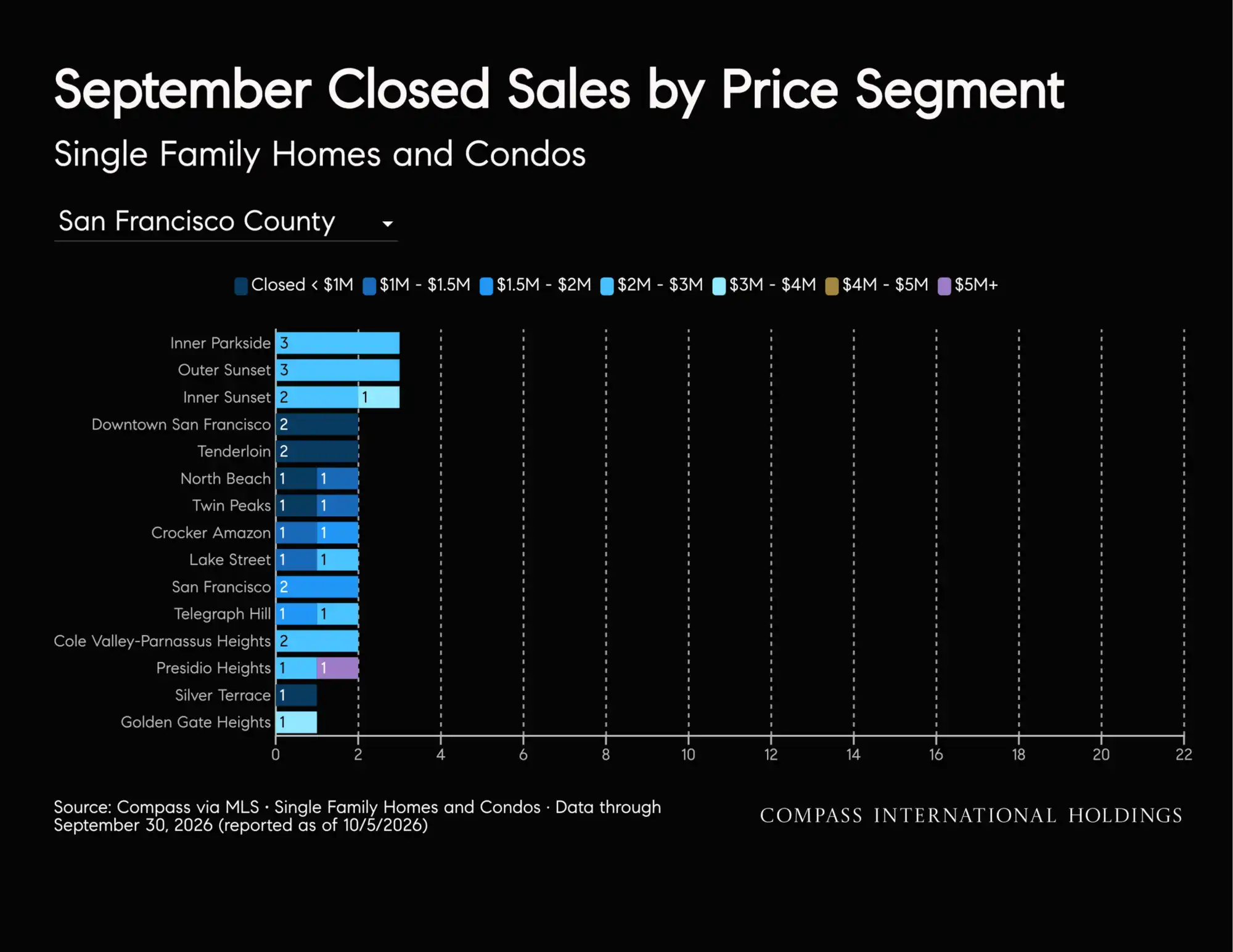
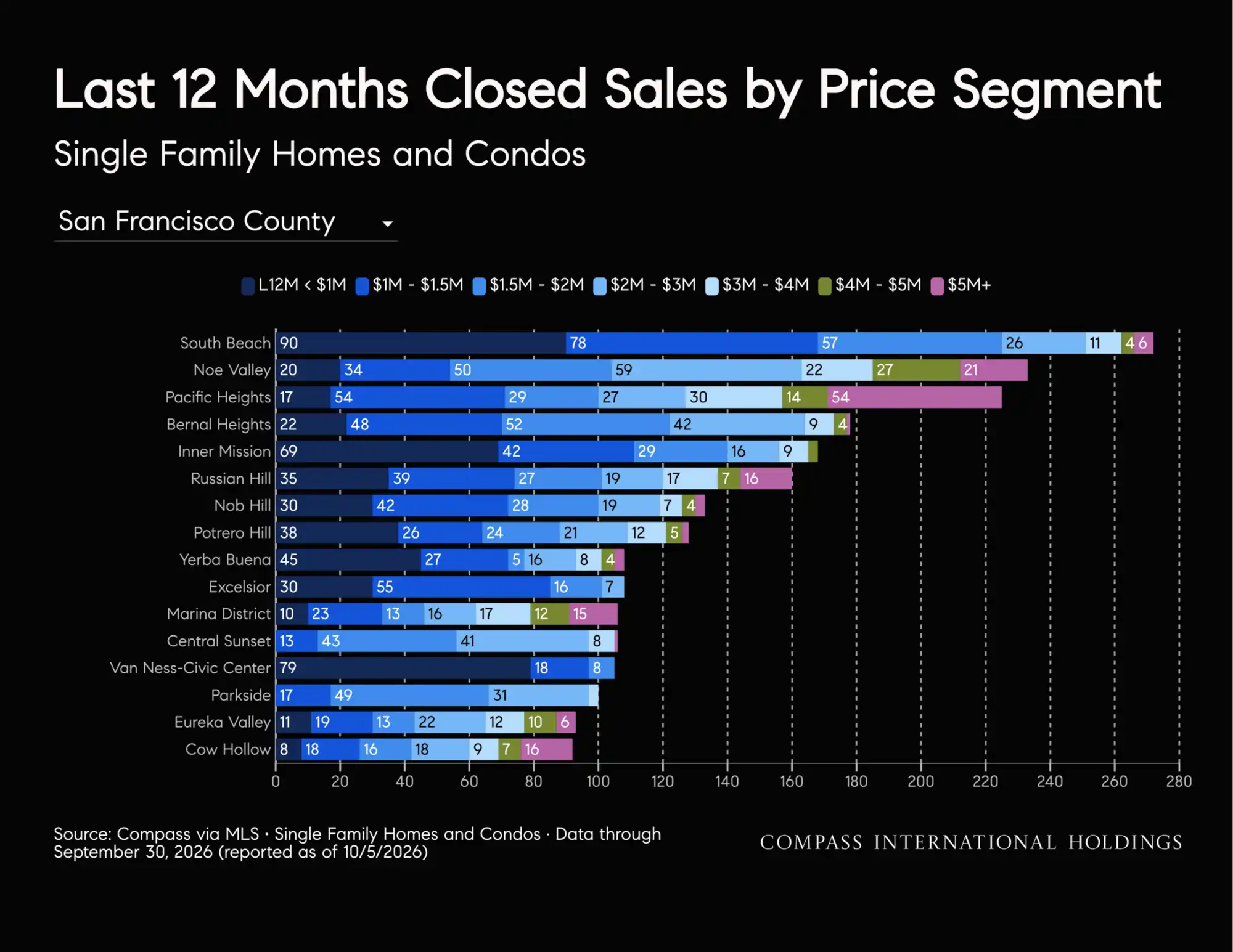
- Sales: 191 single-family homes closed in September, up 4% YoY and up 23% from August. Condo closings fell 2% YoY to 230.
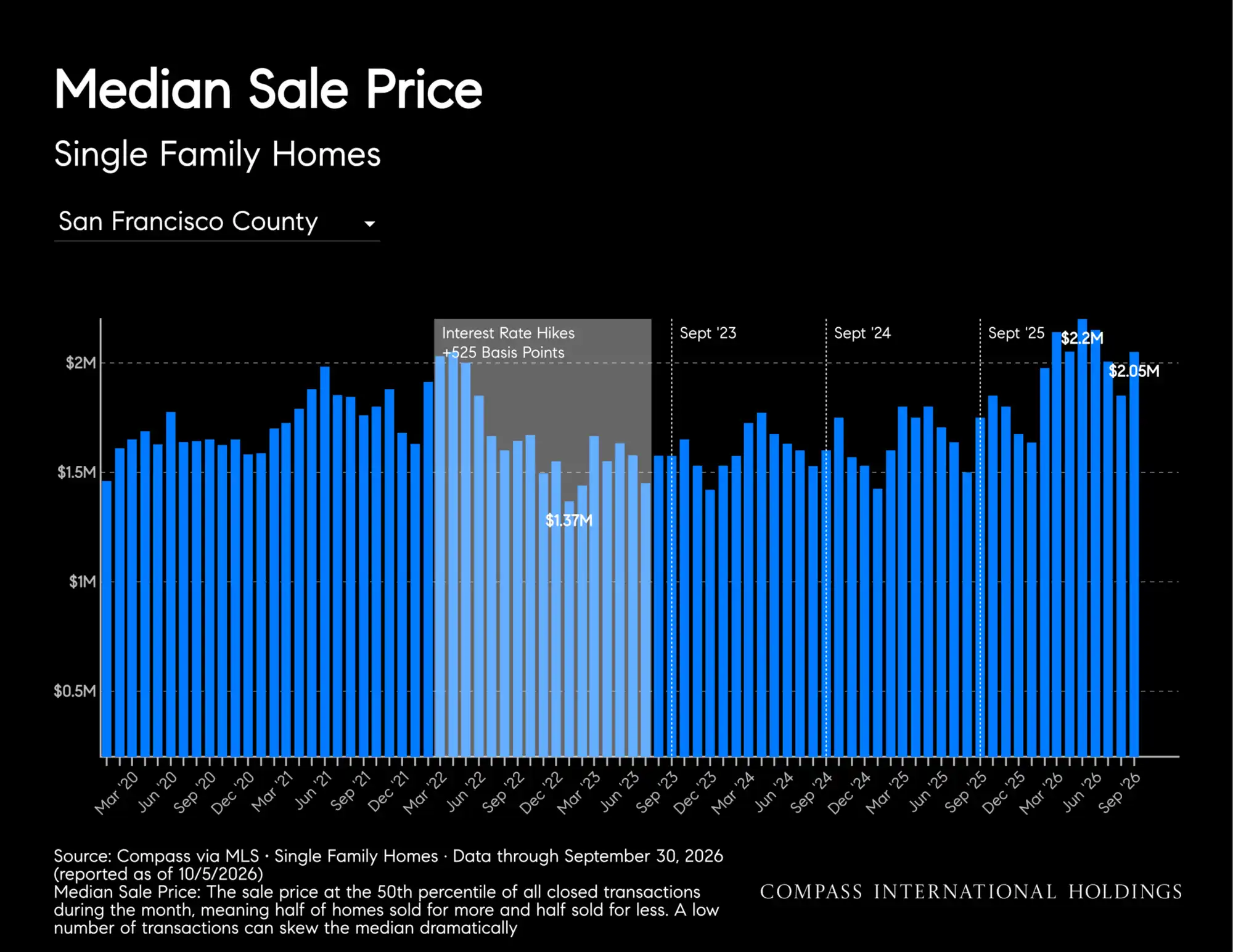
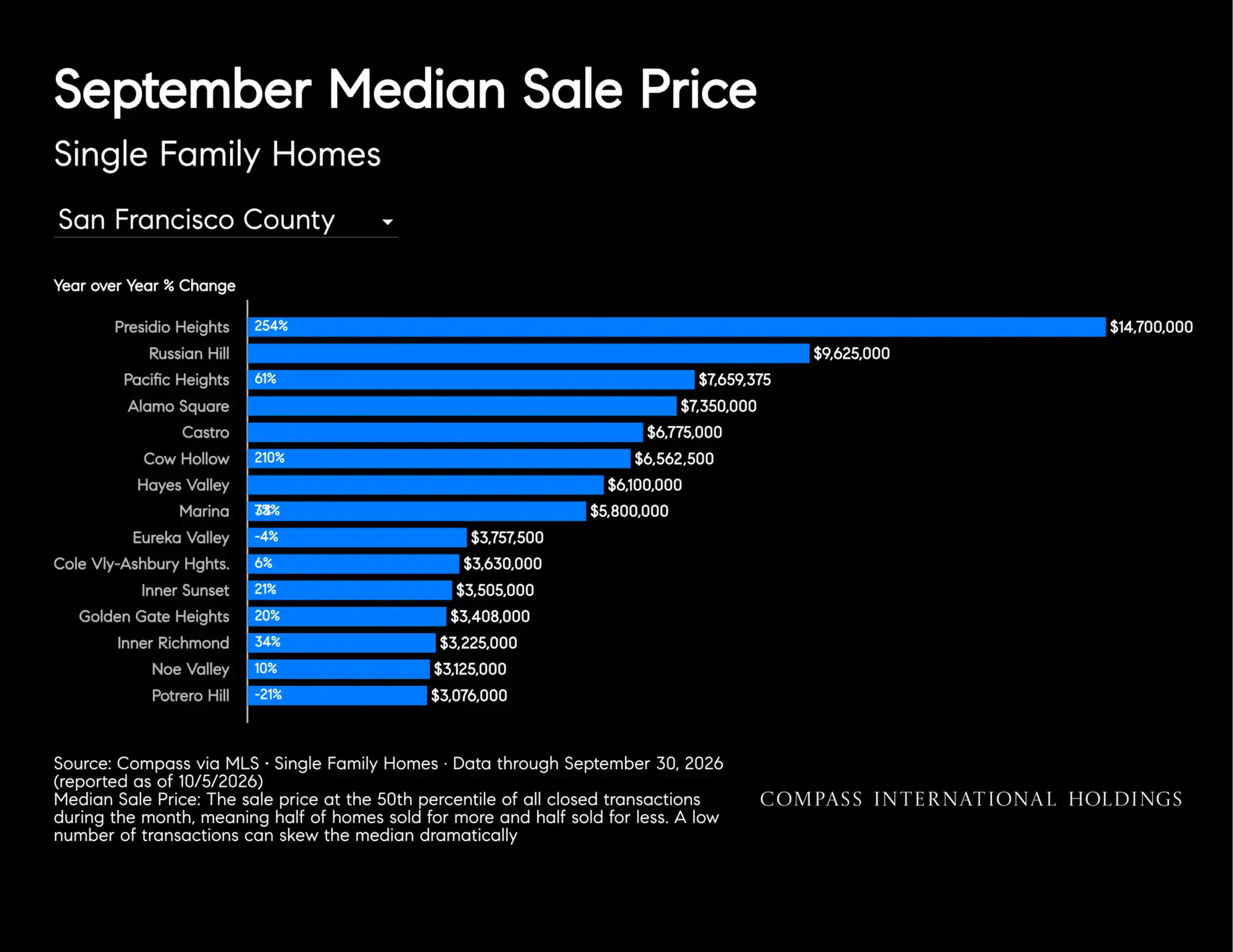
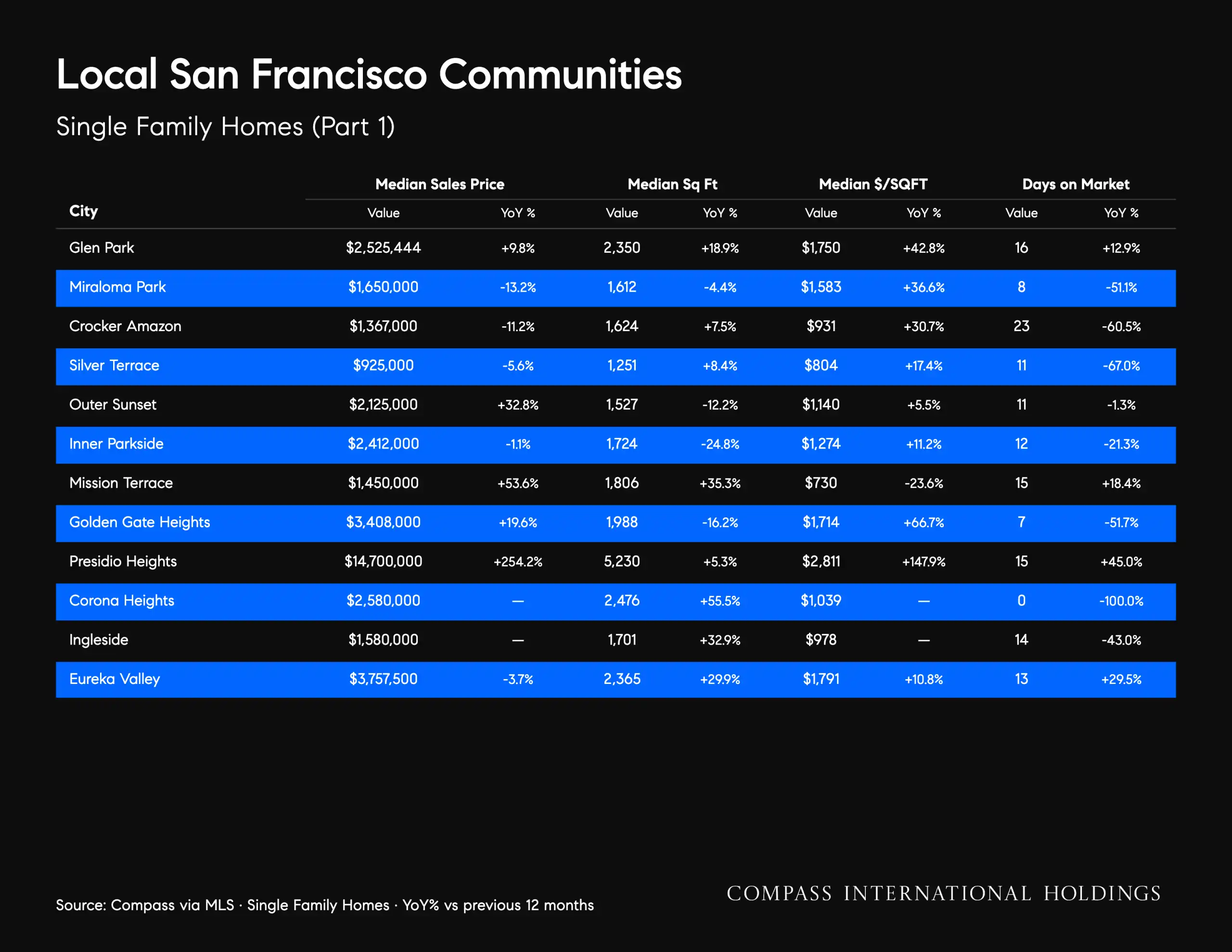
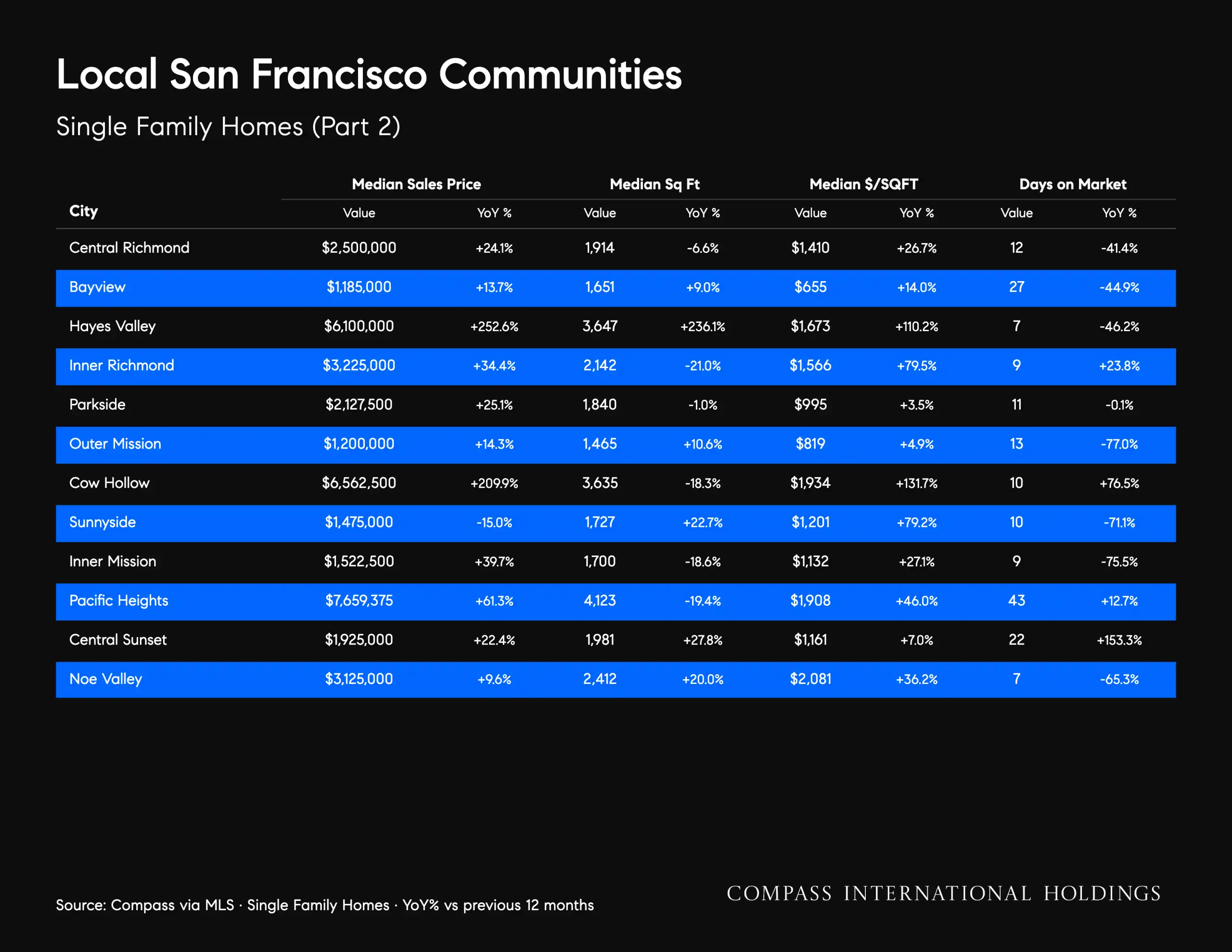
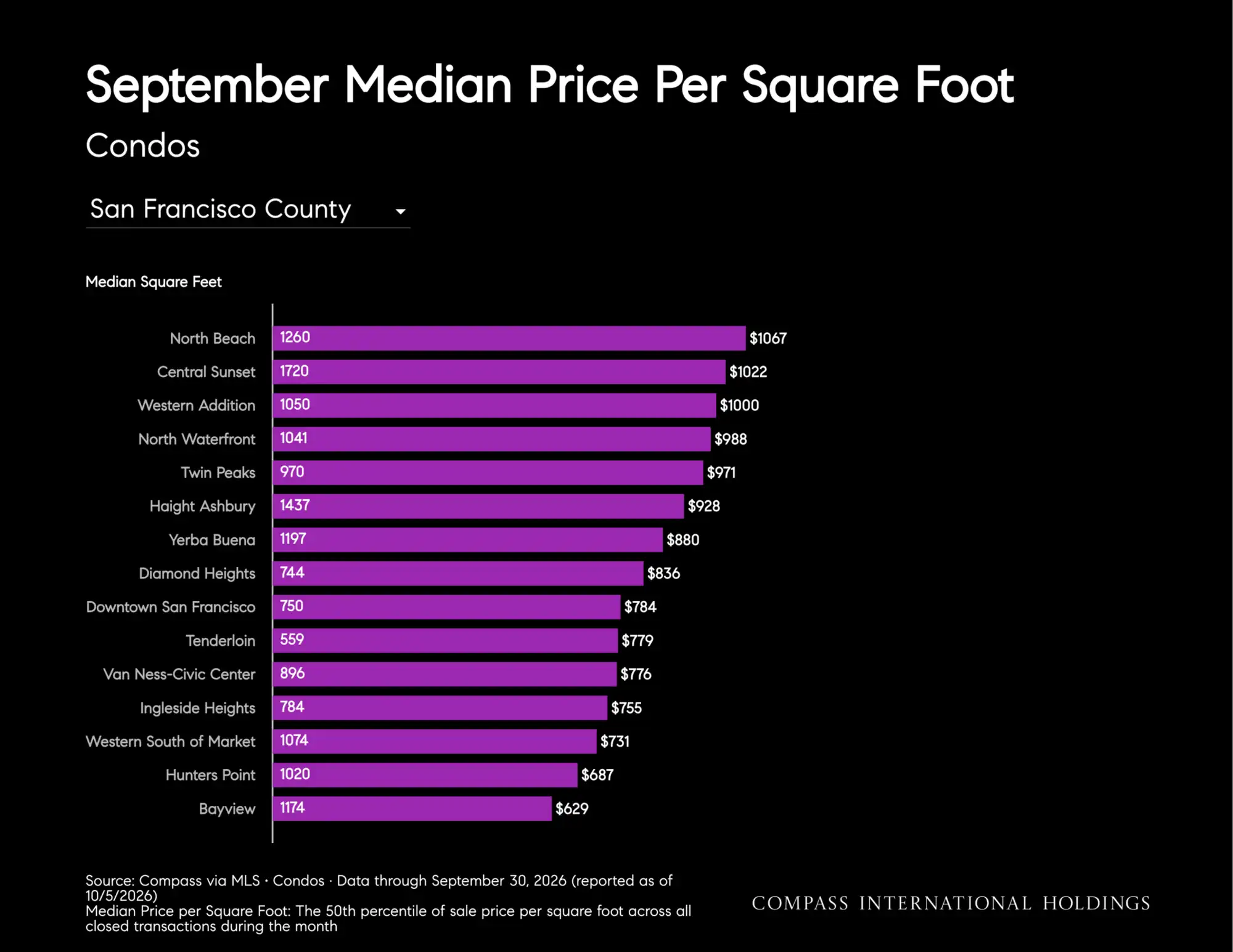
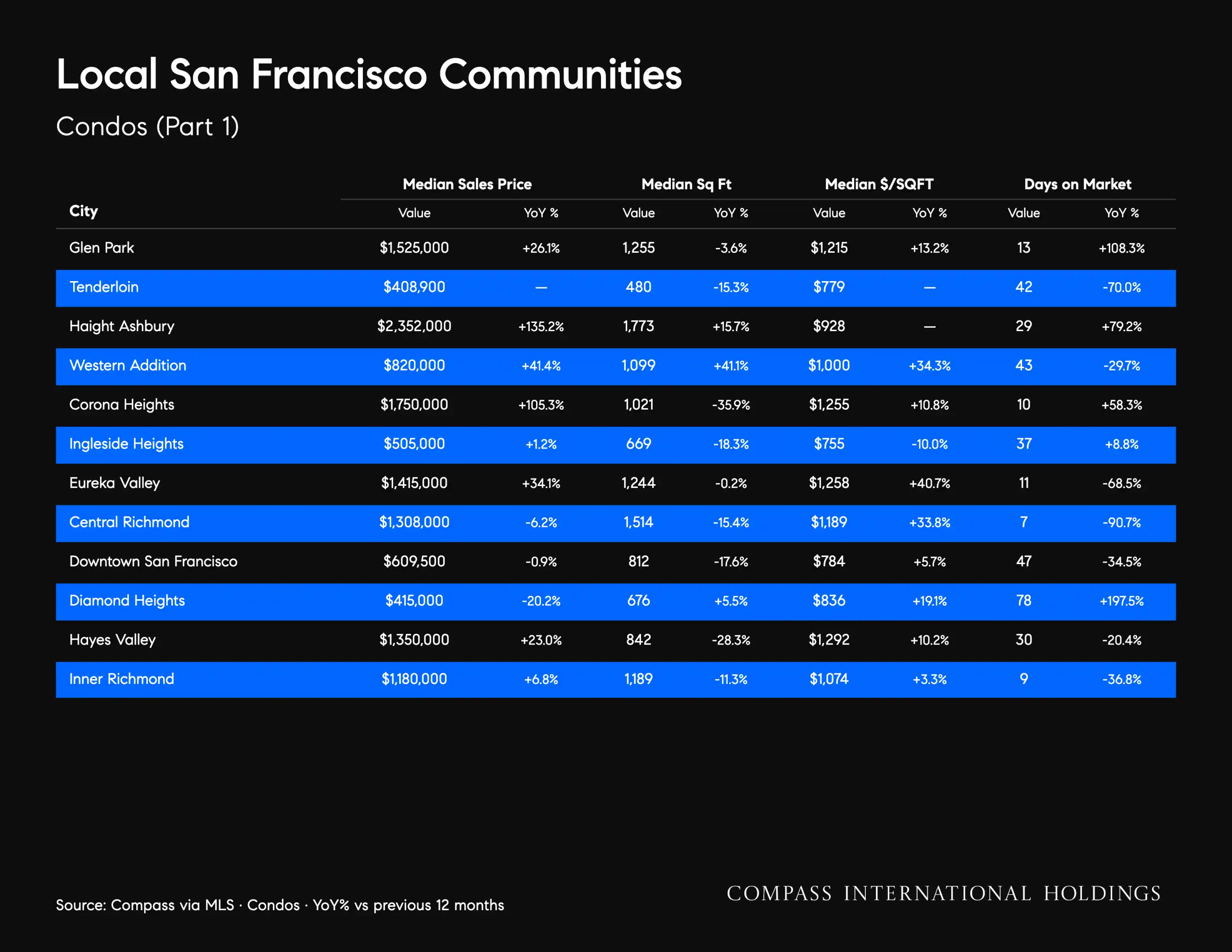
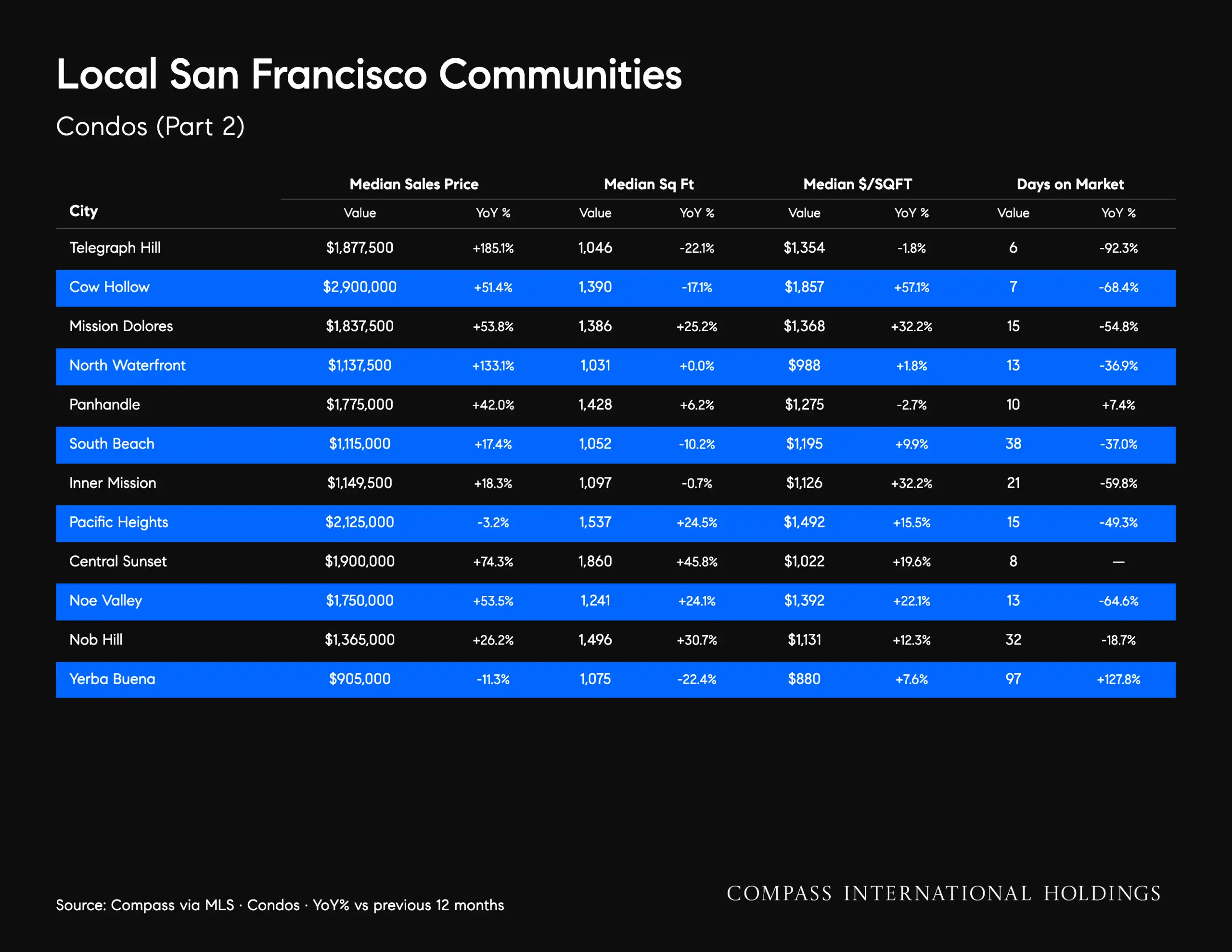
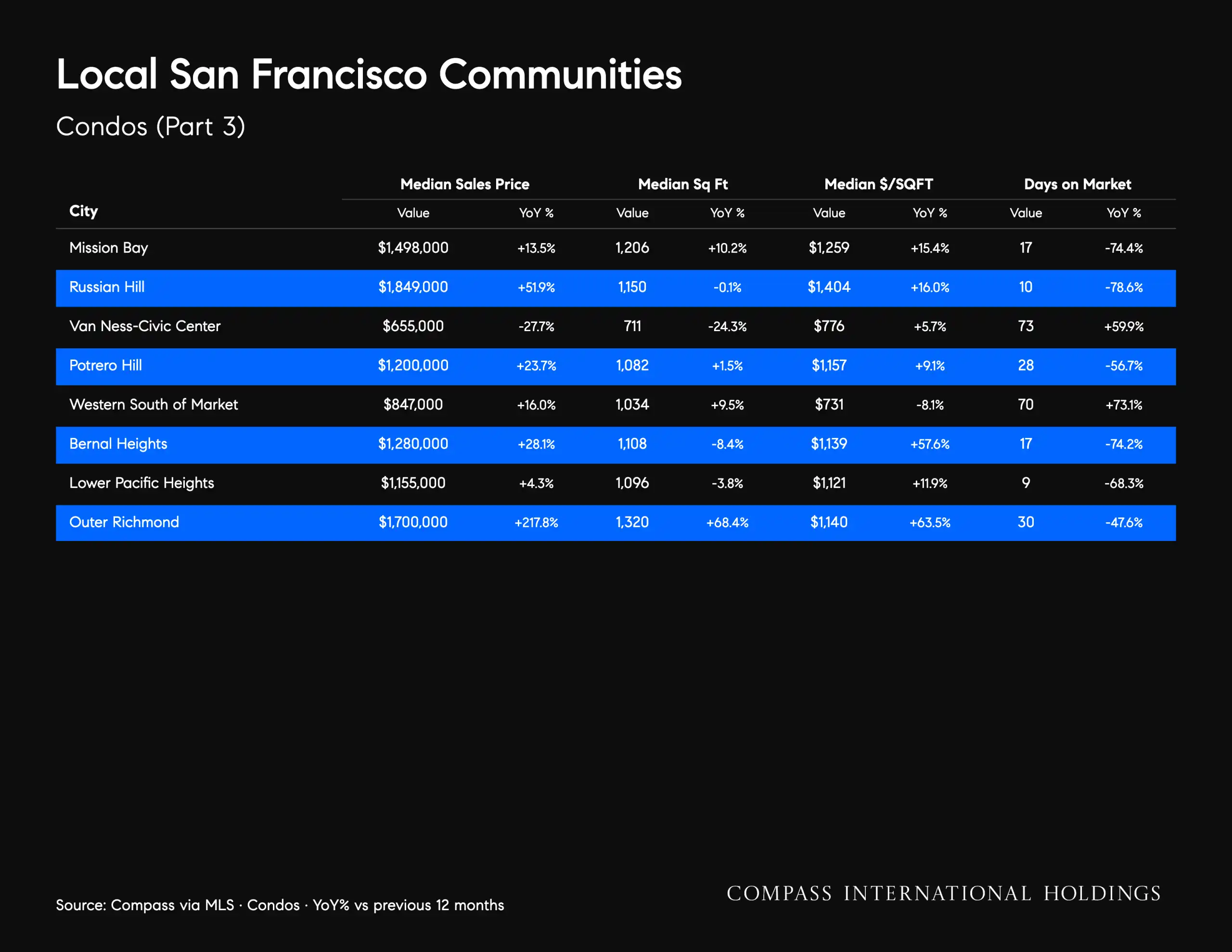
- Prices: The single-family median rose 17% YoY to $2,050,000. The condo median rose 23% YoY to $1,355,500.
- Competition: 92% of single-family sales closed above list, up 17 points YoY. Condo overbidding was 66%, up 27 points.
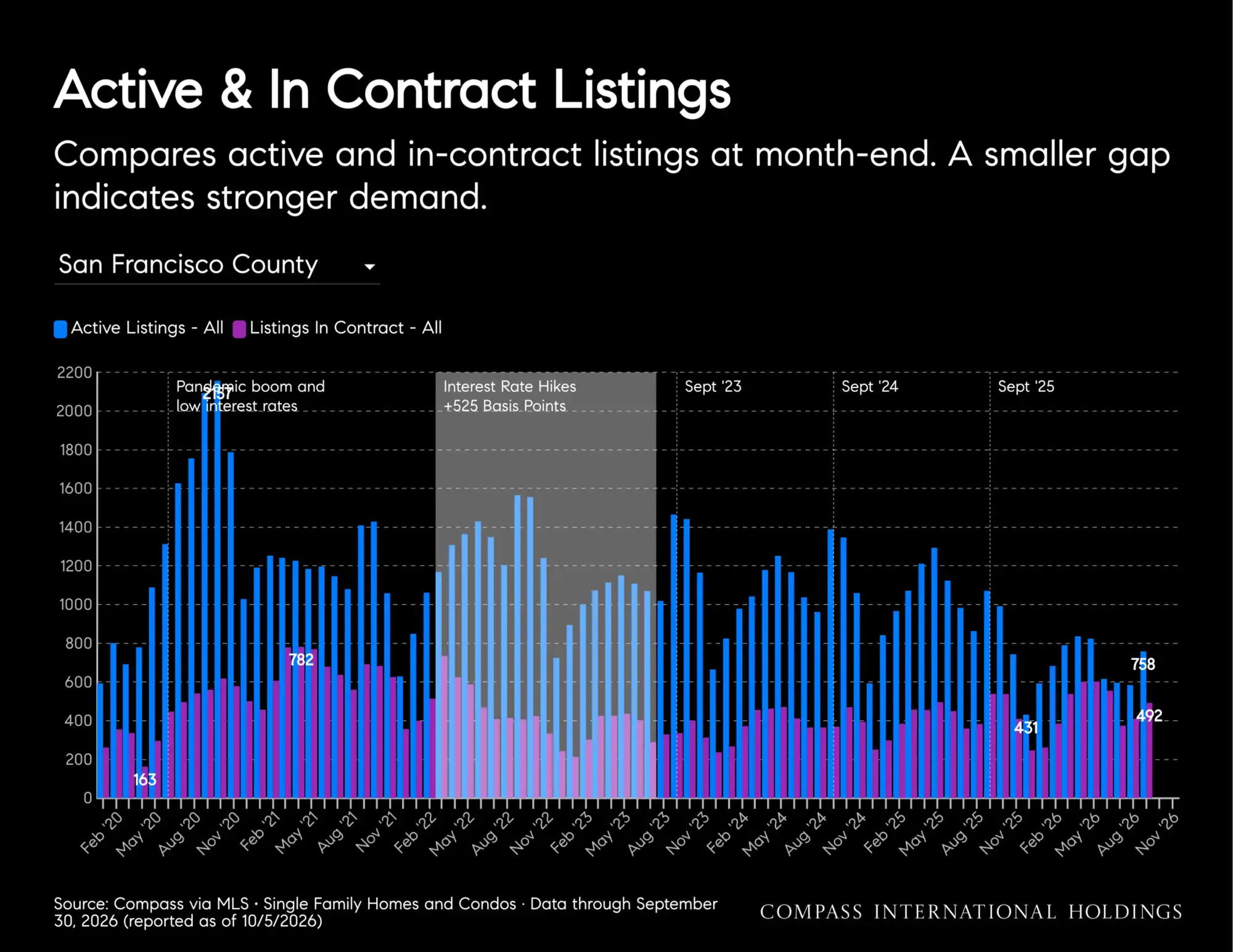
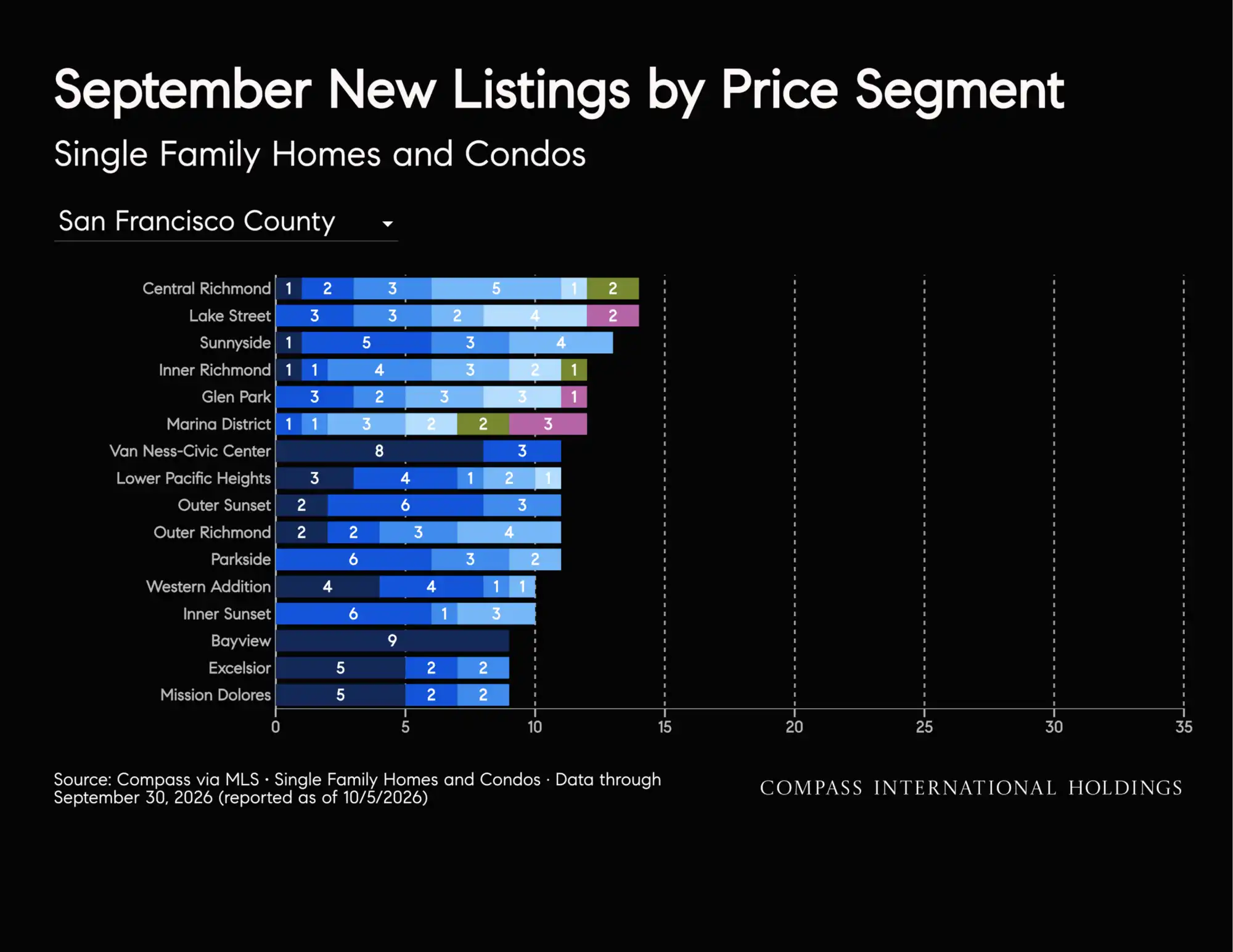
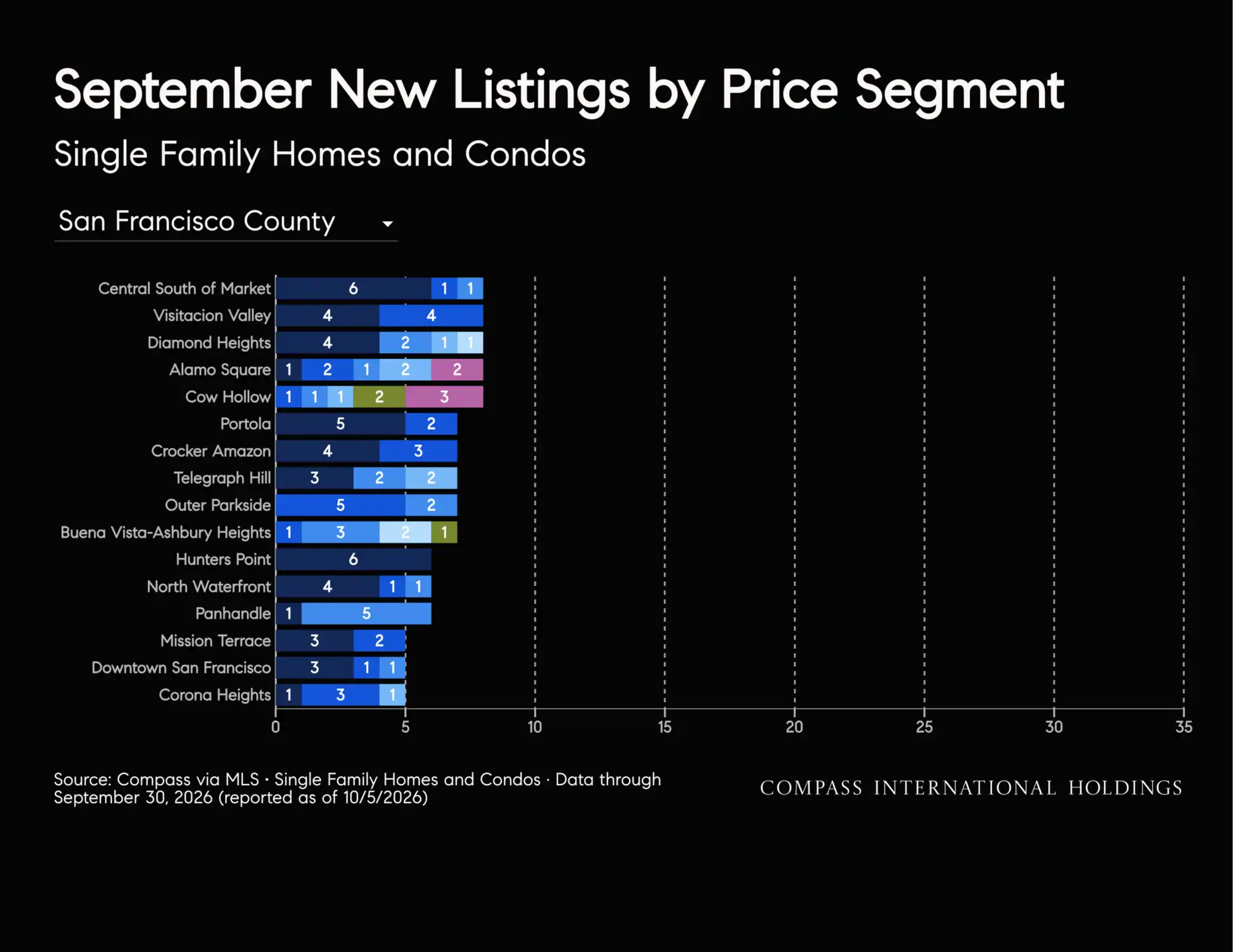
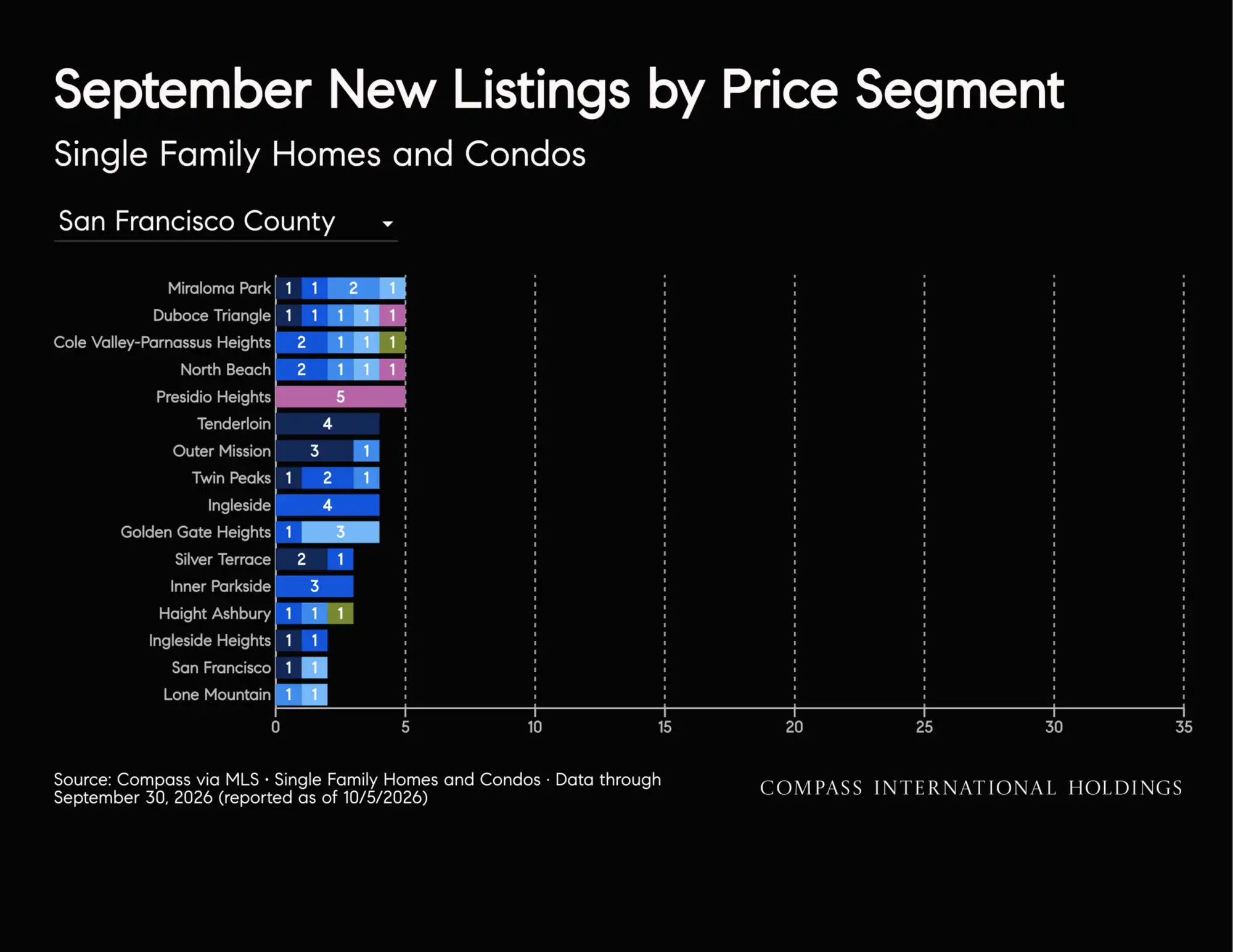
- Inventory: Active single-family listings fell 18% YoY to 237, while new listings fell 8% to 315. Condo active listings fell 33% to 521.
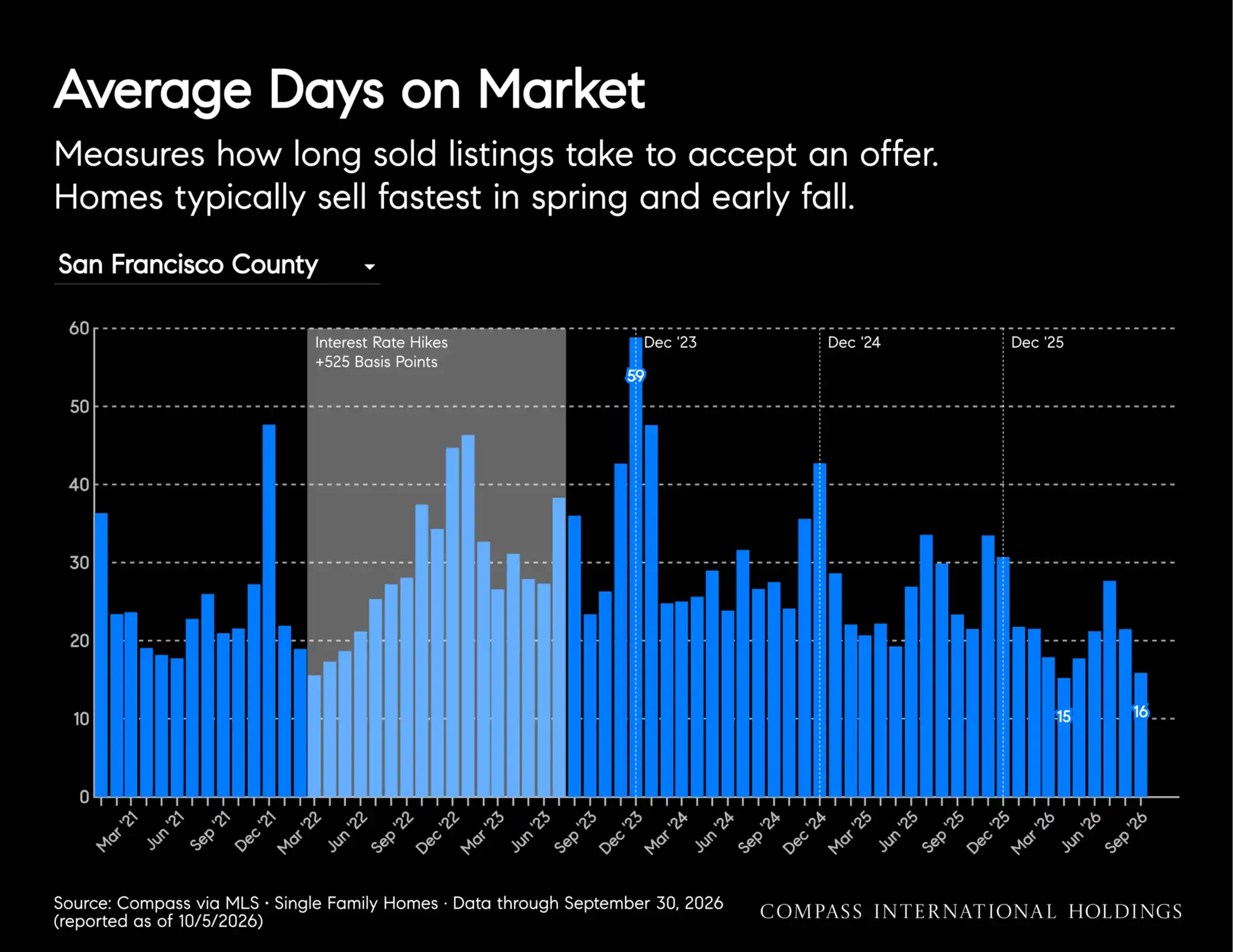
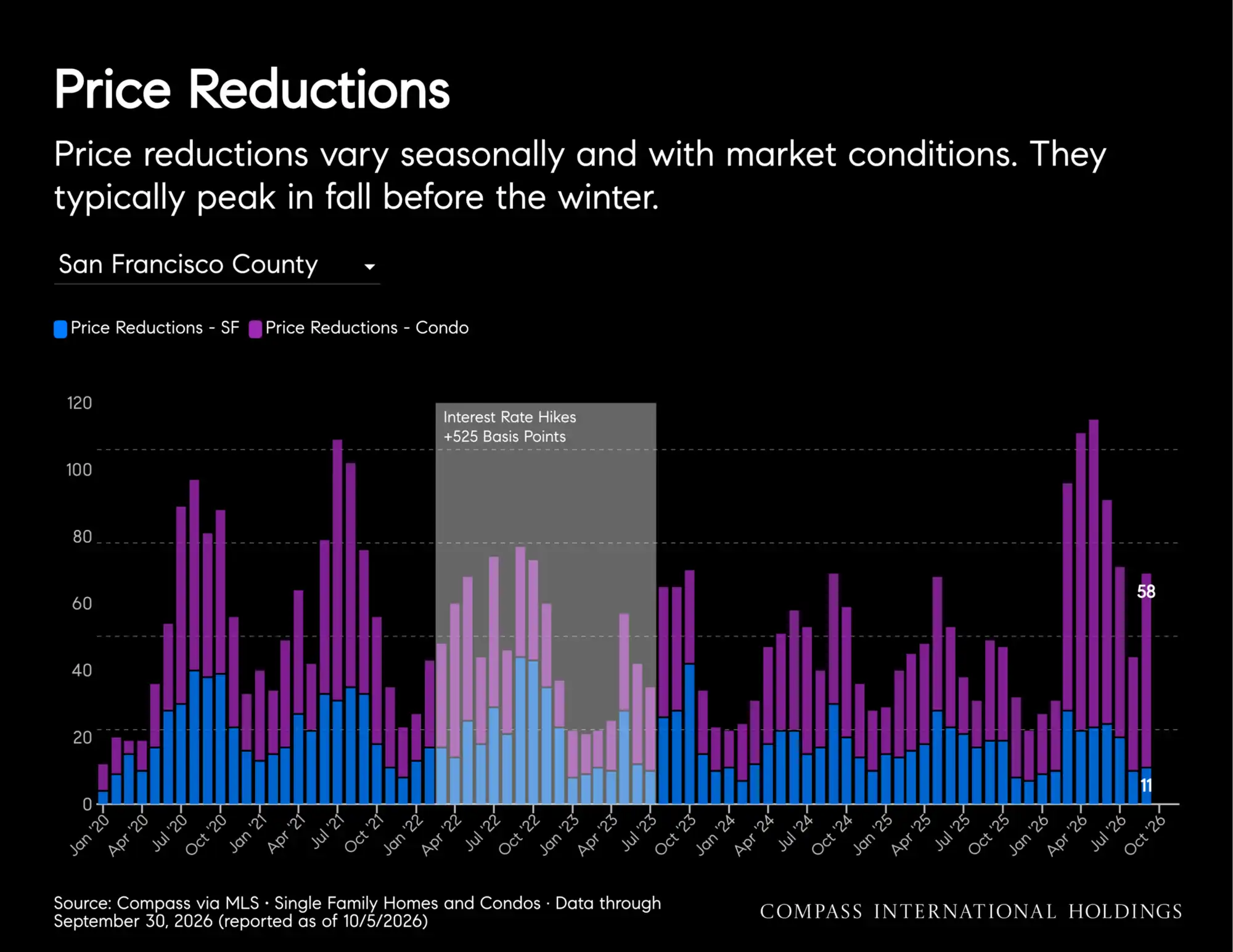
- Single family: Days on market fell to 16 days from 23 a year ago, while months of supply was 1. Price reductions fell 42% YoY, with the reduction rate at 5%.
- Condos: Condo competition rebounded: overbidding rose 27 points to 66%, days on market fell 28% to 32, and supply sat at 2 months. Condo price cuts nearly doubled to 58, but from a low base.
- MoM: Fall inventory arrived: new single-family listings rose 62% and active listings 49% from August. Single-family closings rose 23%, and both medians rose 11%.
- Bottom line: A very tight single-family market and a condo market that is clearly competitive.
October 2026
Economic Outlook
This following section is a look at the macroeconomic factors that drive the national and Northern California housing markets in September and into October.
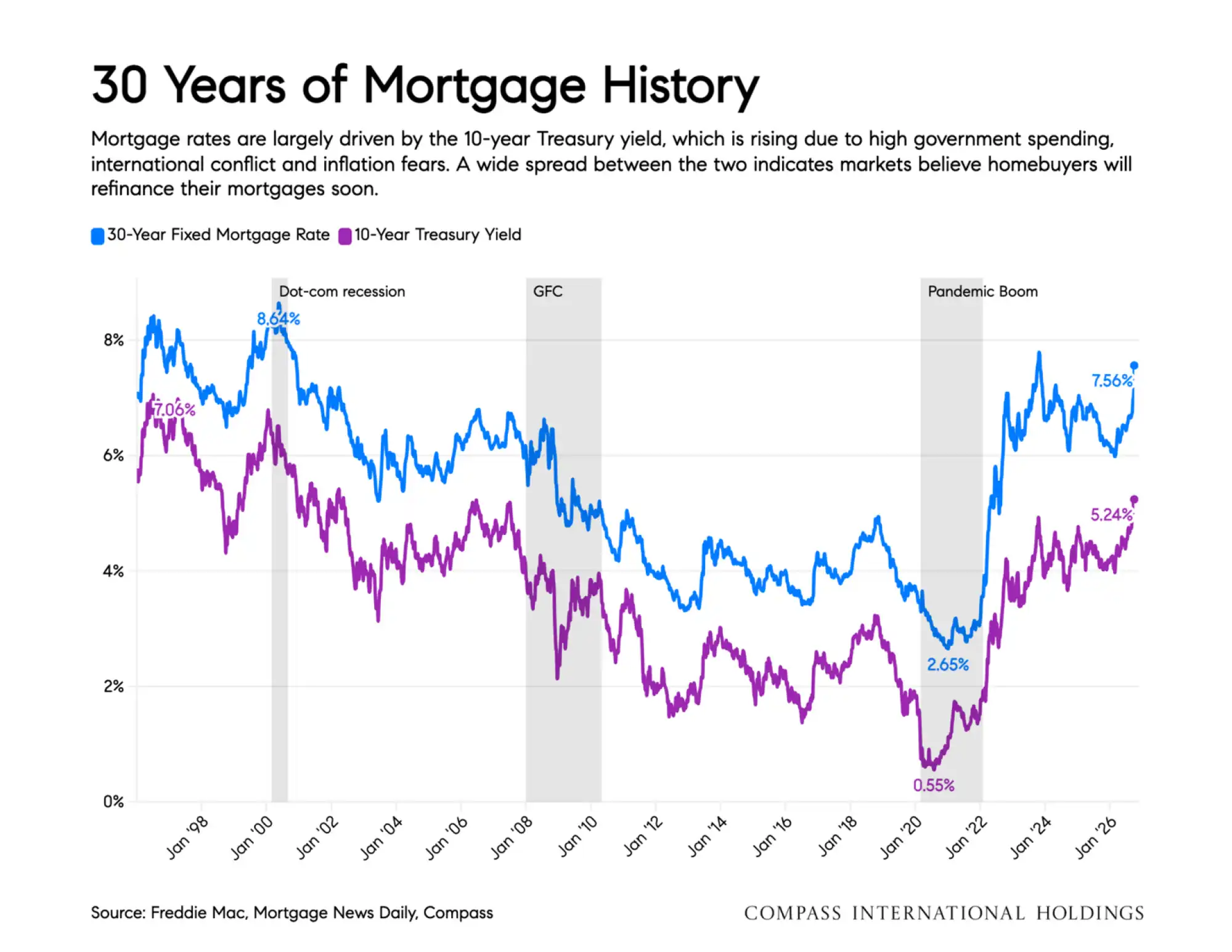
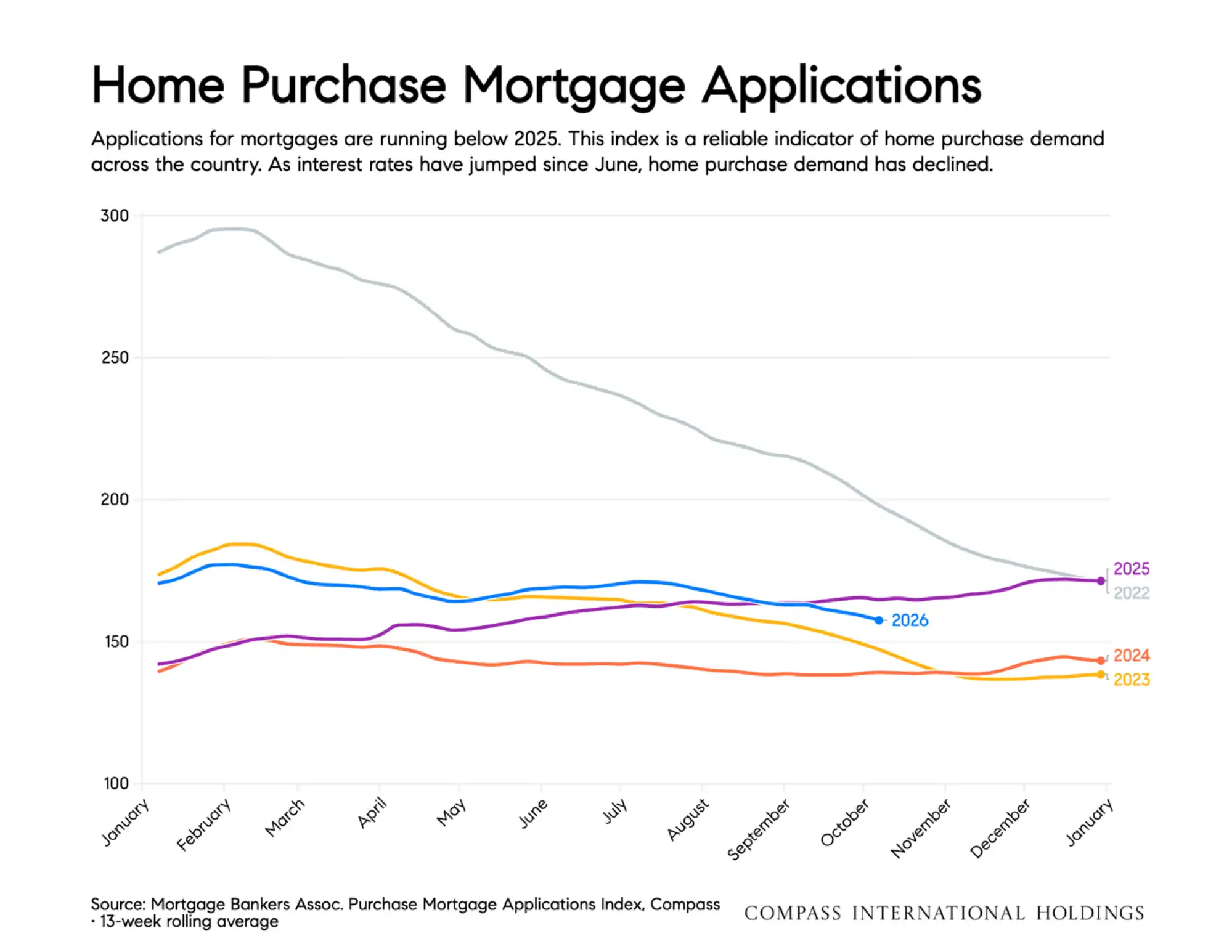
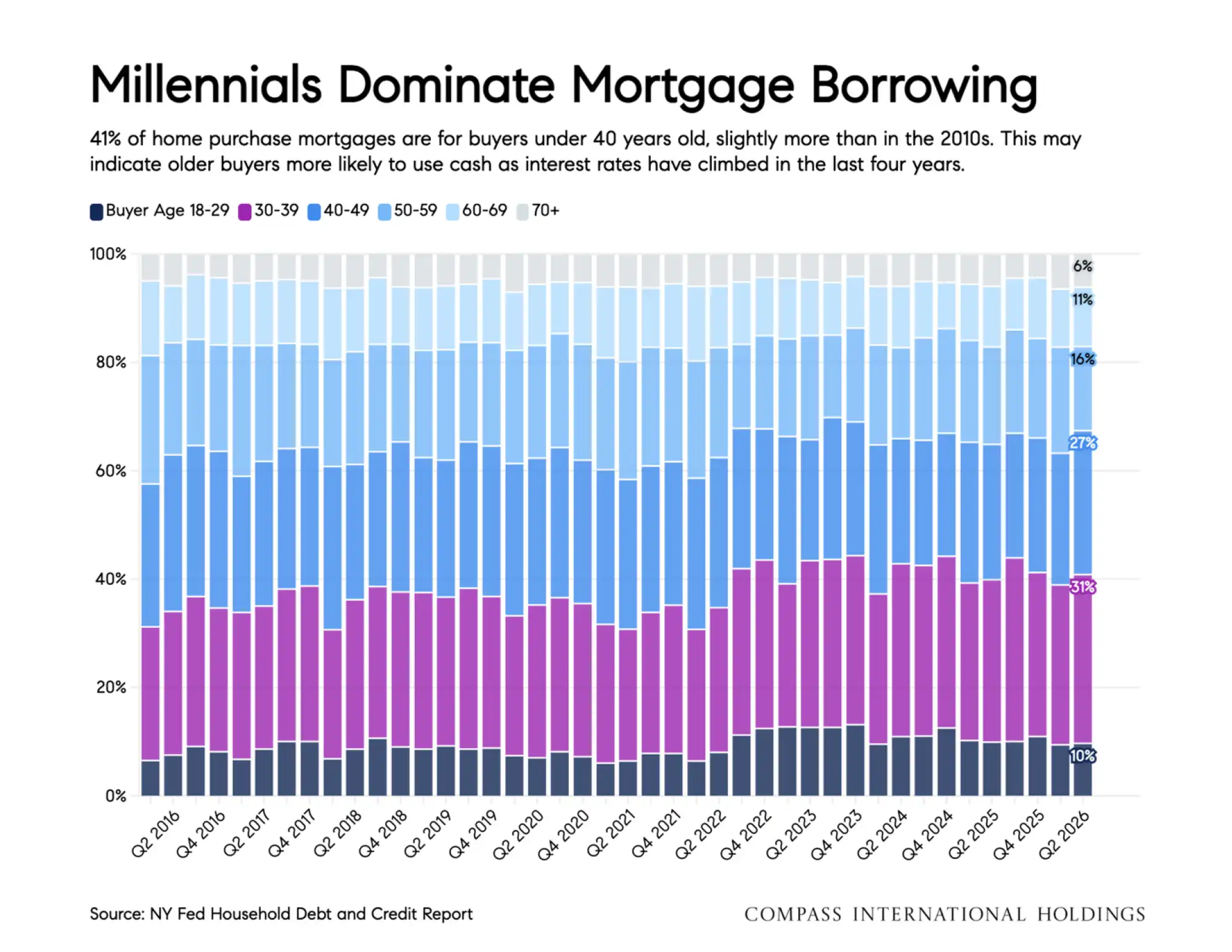
The forces that have been driving interest rates higher in recent months actually accelerated in September leaving the yield on the 10-year Treasury at 25-year highs. Mortgage rates jumped another 70 basis points during the month. That affordability challenge has hit housing demand across the country.
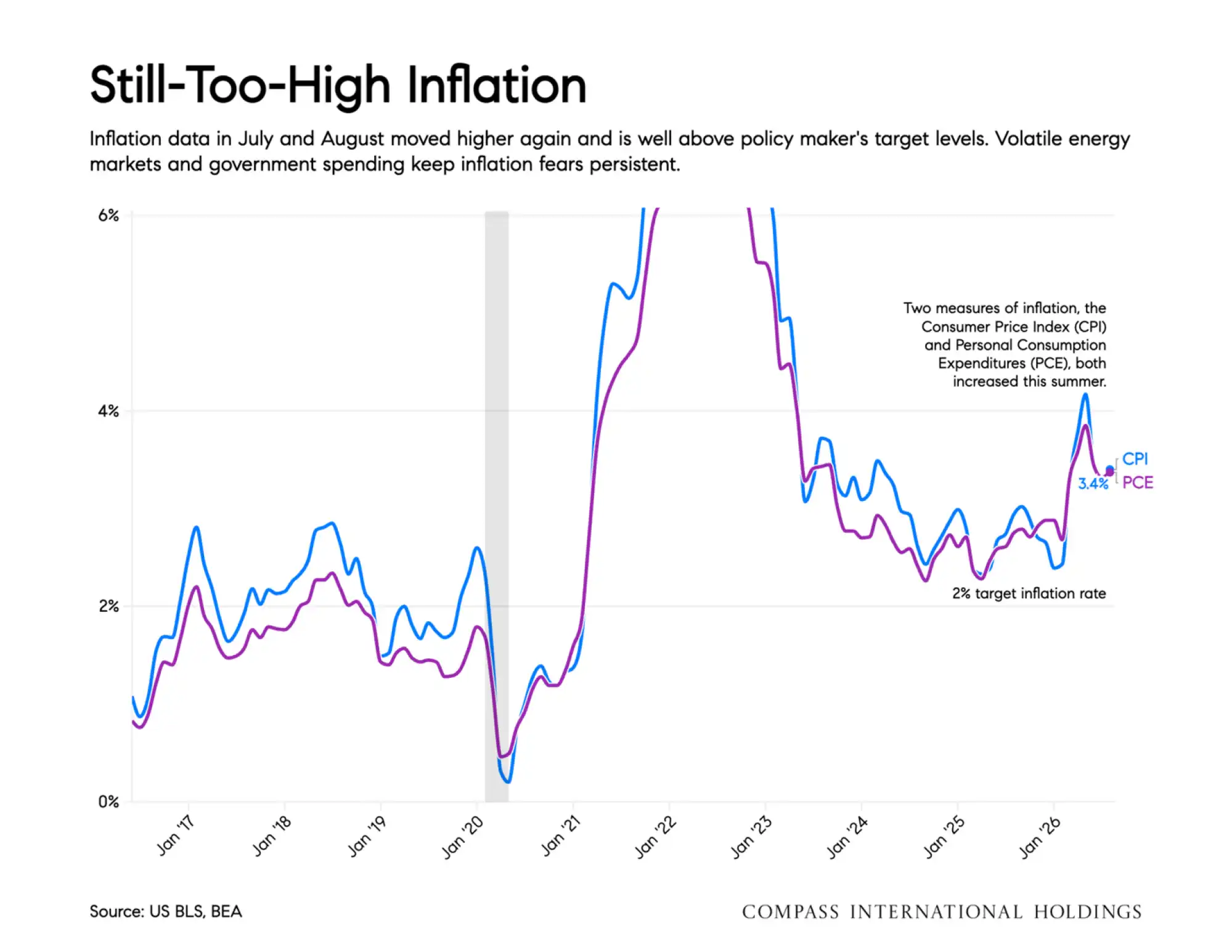
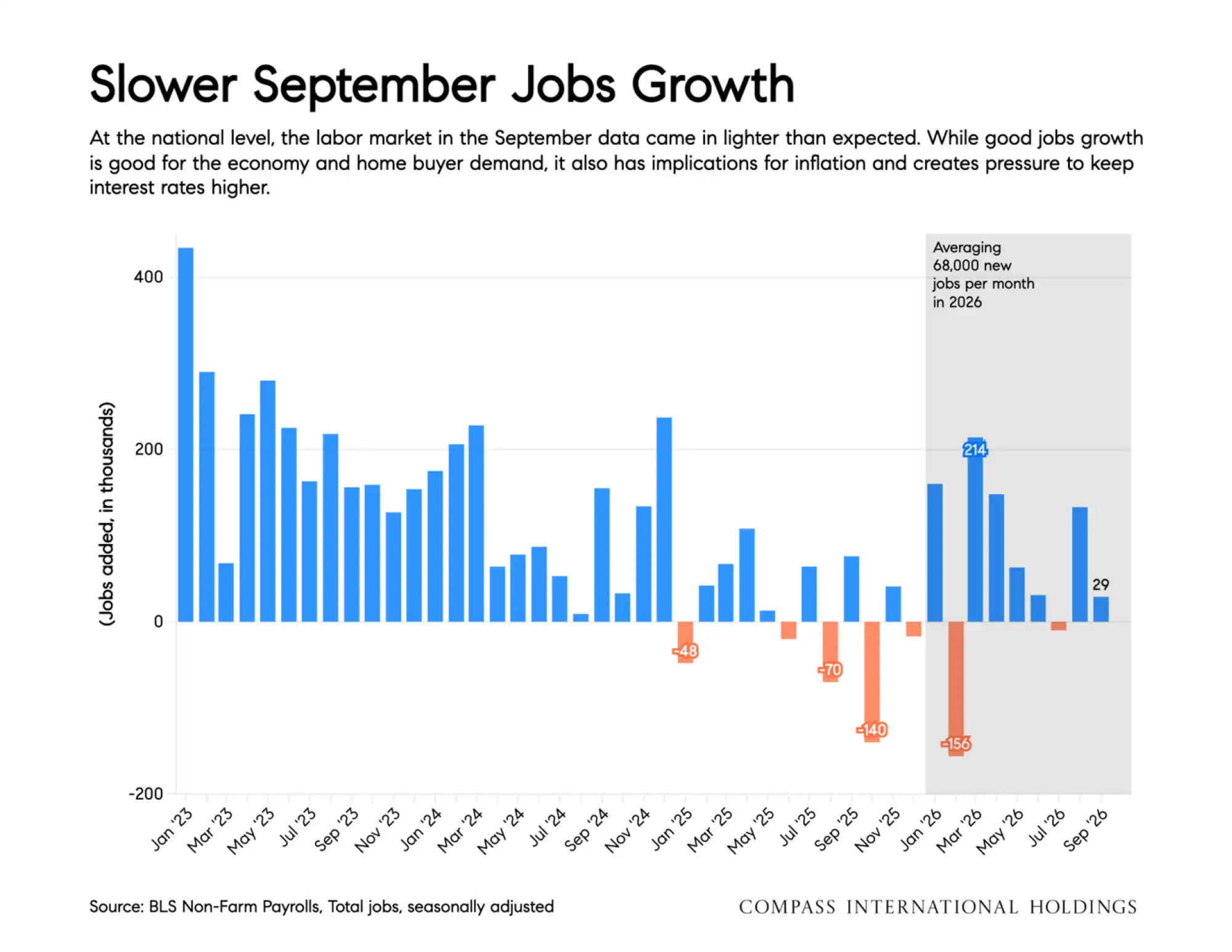
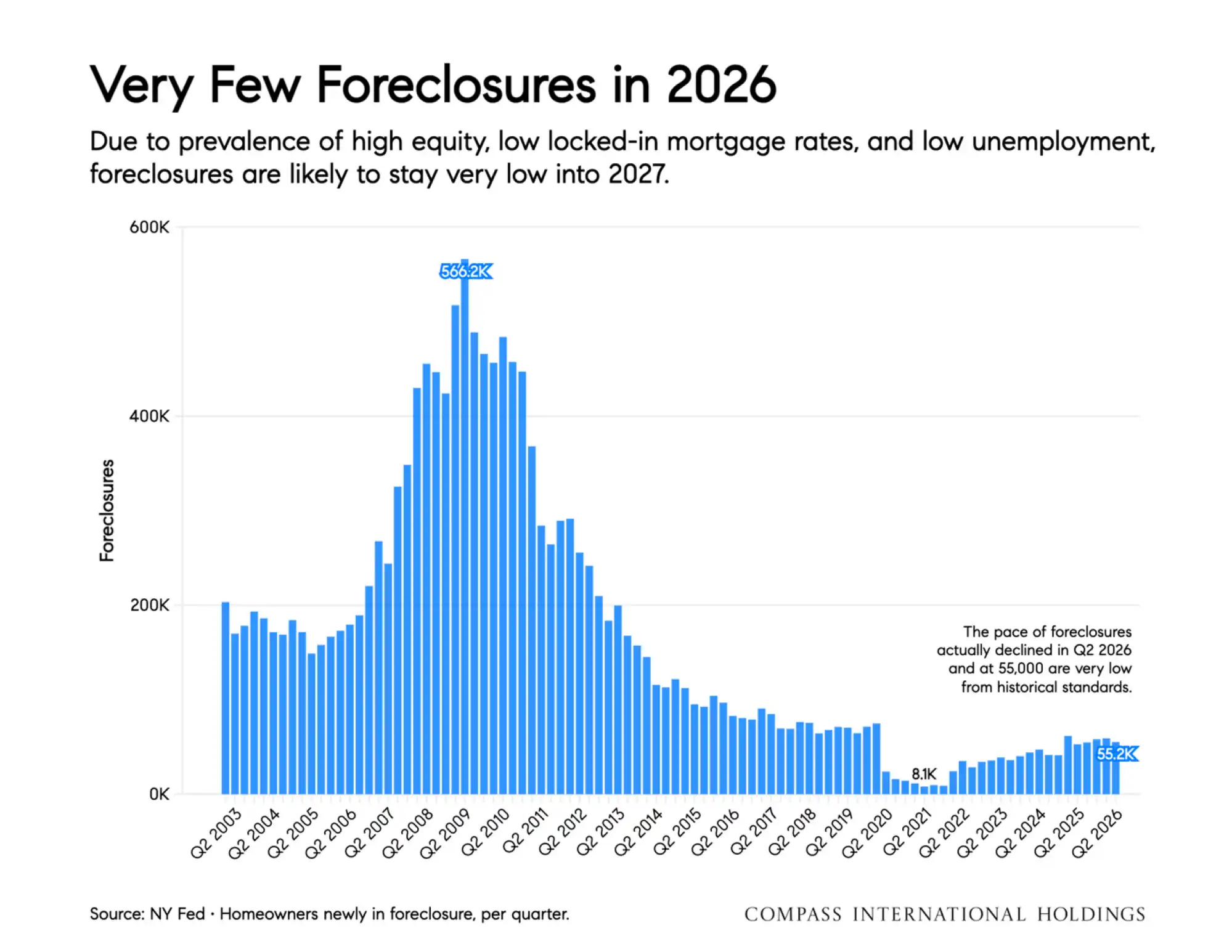
Inflation remains above target rates and other economic signals like jobs and profit growth show a strengthening, rather than weakening economy. Until something in the data changes meaningfully, the signals continue to point at elevated interest rates.
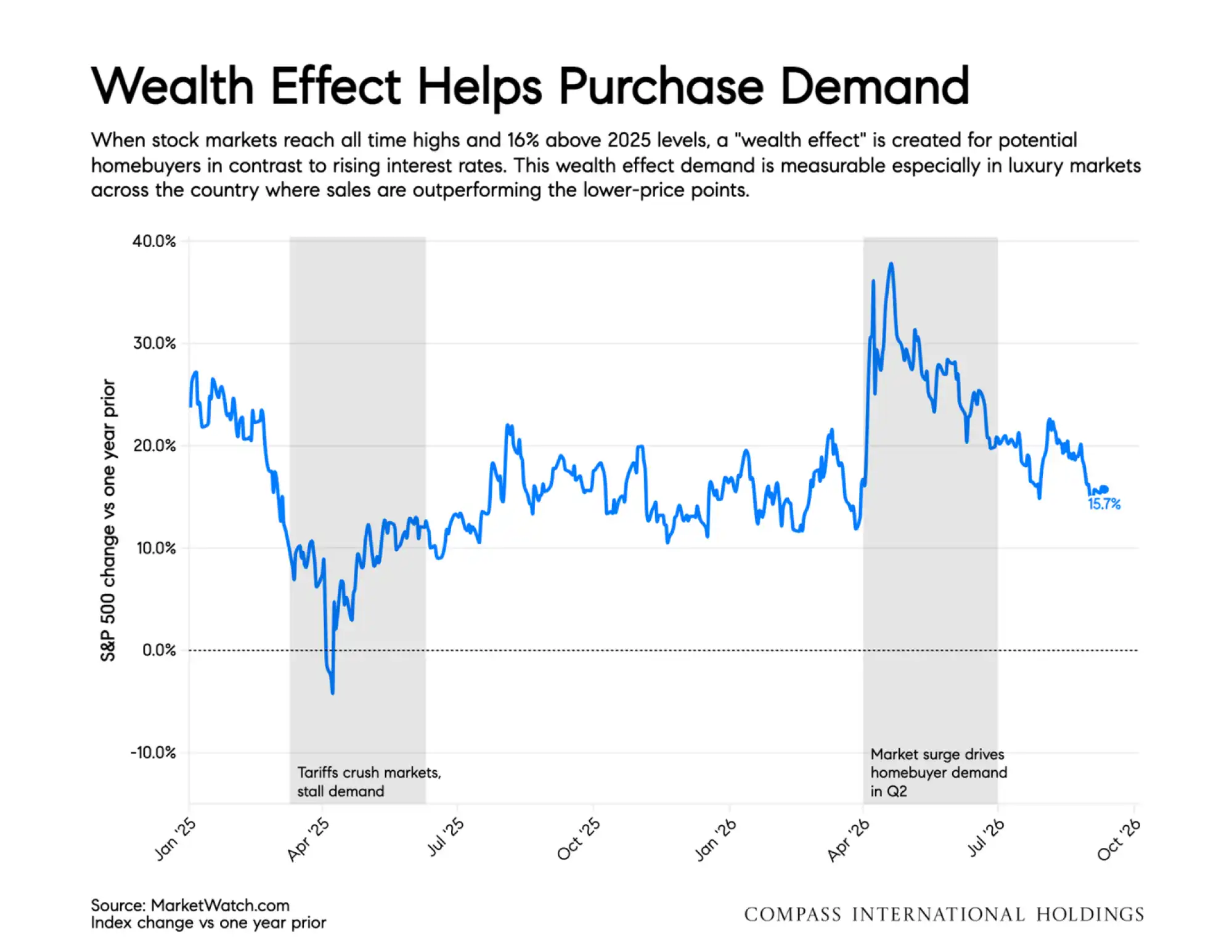
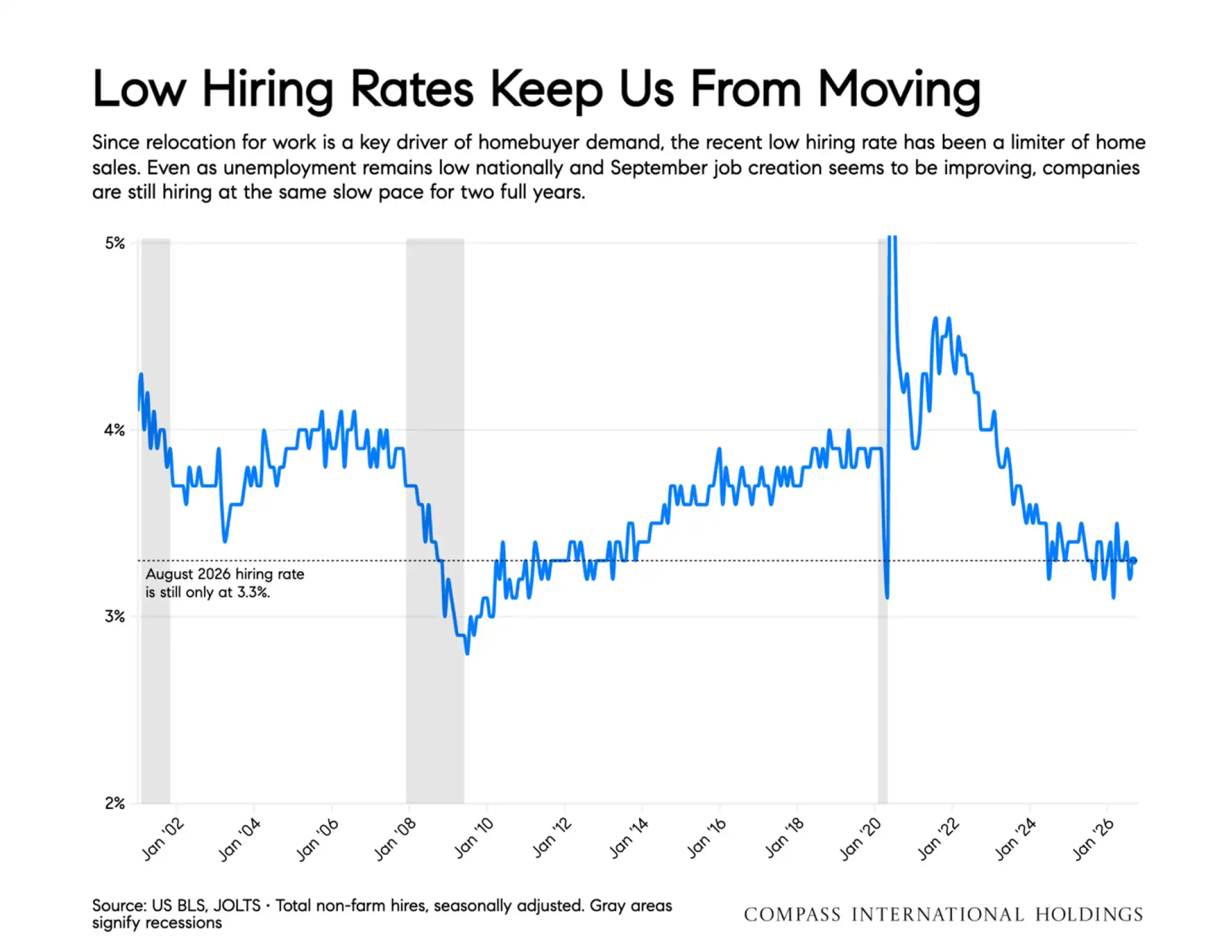
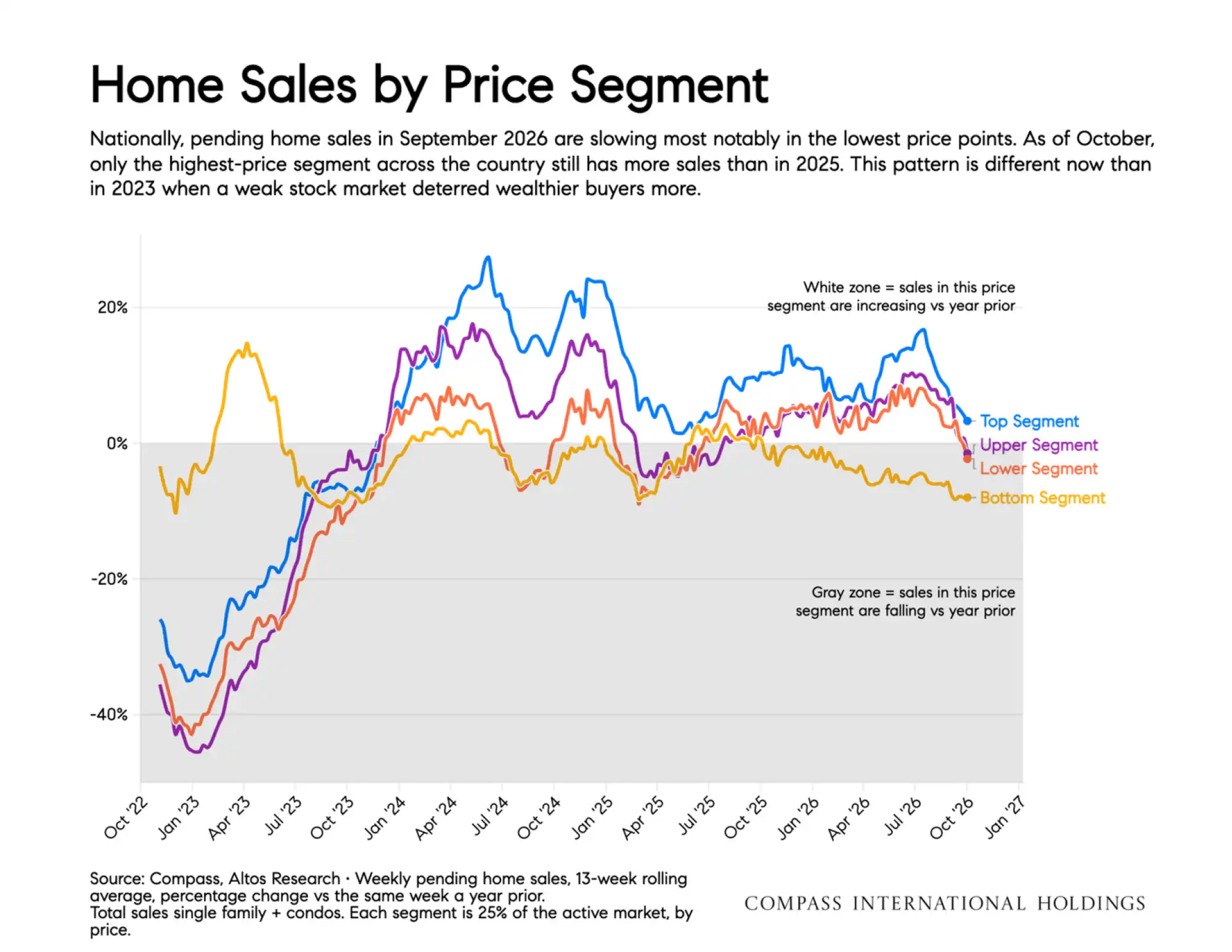
As equity markets continue to trade near all-time highs, some buyer demand is helped by the resulting wealth-effect. Nationally and locally, we can see a bigger slowdown in demand at lower price points while buyers who are more interest-rate sensitive.
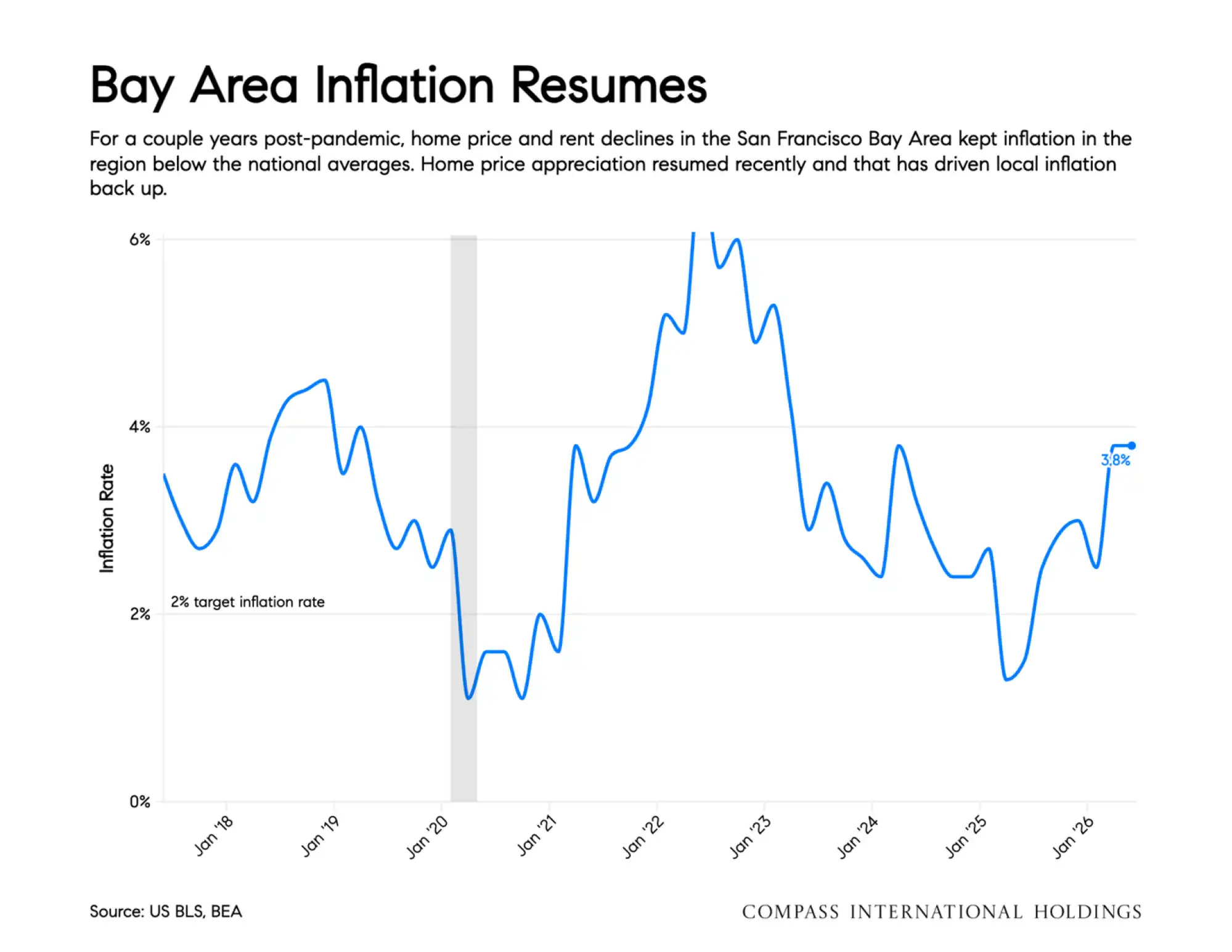
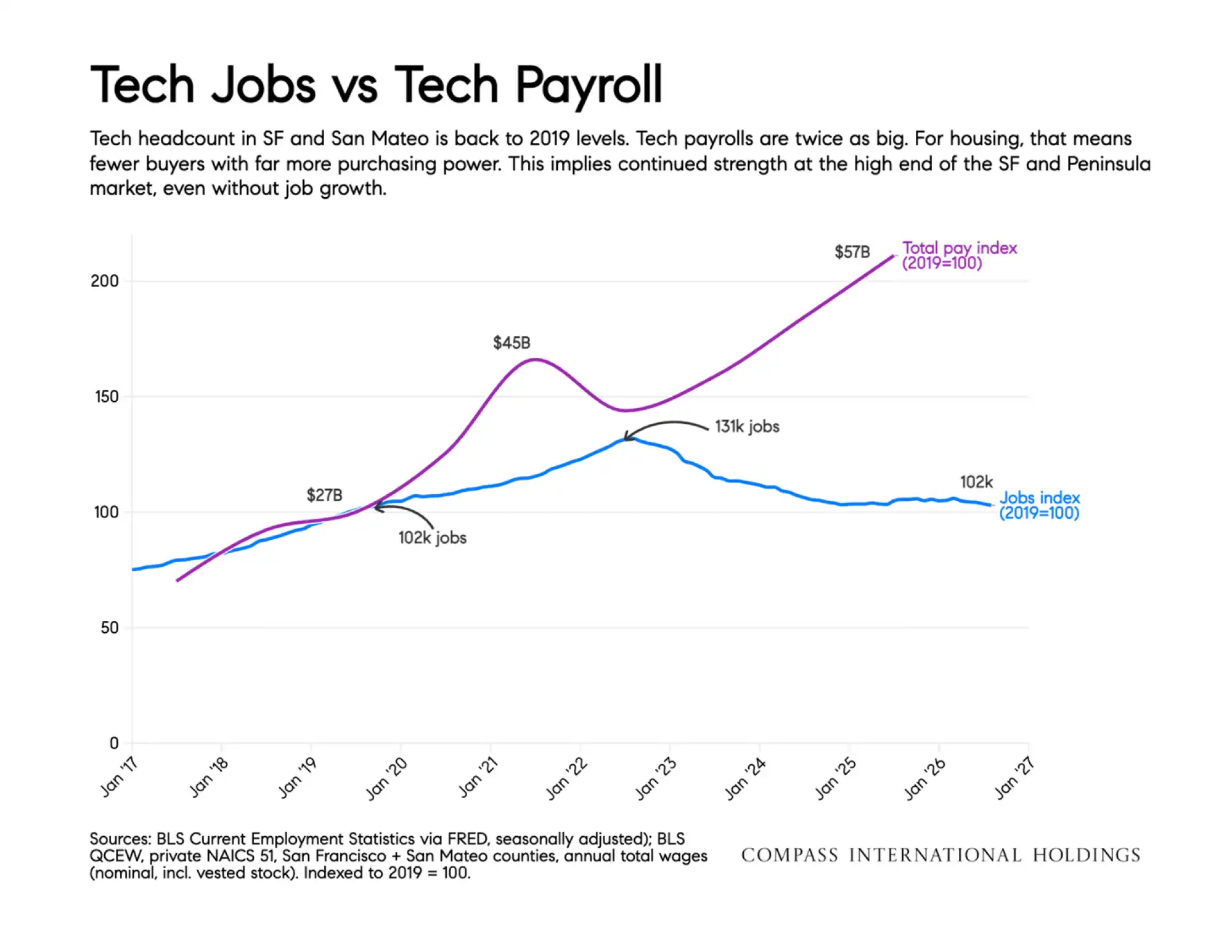
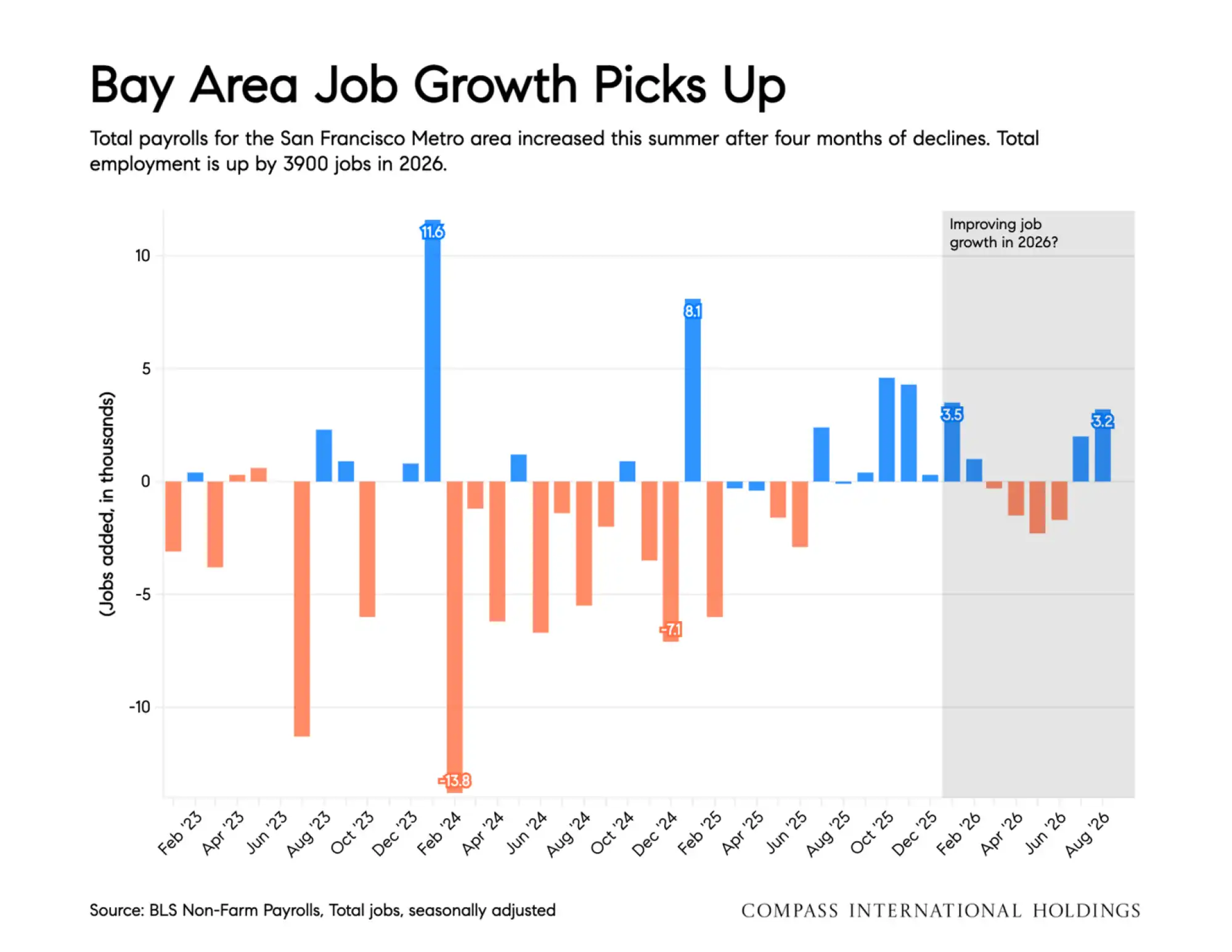
Locally, the tech economy continues to shift from the pandemic-era hiring boom. The industry has fewer jobs now, but the concentration of jobs is shifting to even-higher compensation. For the real estate market, that means fewer buyers with far more purchasing power.
Mike Simonsen
Chief Economist
Compass International Holdings
Social Cookies
Social Cookies are used to enable you to share pages and content you find interesting throughout the website through third-party social networking or other websites (including, potentially for advertising purposes related to social networking).